Burr Coffee Grinders: The Complete Home Buying Guide
Choose a burr coffee grinder by your main brew method and the adjustment control it needs. Favor simple stepped settings for everyday brewed coffee, finer adjustment for espresso, and controls that match how much coffee you grind.
On this page (12 sections)
- What should you look for in a burr coffee grinder?
- How does a burr grinder work?
- How many grind settings do you need?
- Which burr coffee grinder features matter at home?
- Which grinder fits your brewing routine?
- Burr coffee grinder vs blade grinder: which should you buy?
- How do you choose a burr coffee grinder for espresso?
- How should you set up a new burr coffee grinder?
- How do you adjust grind size when coffee tastes wrong?
- How should you clean and care for a burr grinder?
- Which buying and grinding mistakes should you avoid?
- Which burr coffee grinder should you choose?
Choose a burr coffee grinder by your main brew method and the adjustment control it needs. For daily drip coffee, easy repeatable settings matter most; for espresso, small changes near the fine end deserve more attention.
Then match the controls to your morning routine. A household filling a coffee pot needs a different workflow from someone weighing beans for one espresso.
The OXO suits repeated hopper-fed grinding, the Baratza Encore suits simple manual control, the Cuisinart suits pot-sized batches, and the Fellow Opus 2 suits frequent recipe changes. Each solves a different buying problem.
This guide covers those choices, plus setup, care and the mistakes that make fresh coffee harder to dial in. For the basic mechanism, start with what a burr grinder is and how it works.
What should you look for in a burr coffee grinder?
Choose by brew method first, daily workflow second and counter fit third. That order keeps a large hopper or long settings list from distracting you from the control your coffee actually needs.
| Factor | What to check | Why it matters |
|---|---|---|
| Main brew method | Espresso, drip, pour-over, French press or cold brew | Sets the grind range and adjustment needs |
| Adjustment style | Fixed steps or continuous movement | Affects fine changes and returning to recipes |
| Dosing controls | Timer, pulse button, cup selector or automatic stop | Determines how you manage each batch |
| Bean routine | One coffee all week or frequent changes | Helps you choose hopper-fed or weighed-dose use |
| Counter fit | Body dimensions and working clearance | Leaves room to fill, empty and clean |
| Care | Burr access and approved cleaning steps | Makes regular maintenance easier to keep up with |
Start by naming the coffee you make most often. If espresso is an occasional idea but you brew a drip pot every morning, buy around the drip routine unless espresso is a firm next step.
Also decide how much attention you want to give each dose. A remembered timer can simplify repeated batches, while direct start-and-stop controls suit someone who wants to manage the amount themselves.
For a shortlist after you understand these trade-offs, see our best burr coffee grinder picks. Choose the workflow first, then compare the models within it.
How does a burr grinder work?
A burr grinder crushes coffee between two toothed surfaces, with an adjustable gap that controls the size of the grounds. Narrowing the gap generally makes a finer grind; widening it makes a coarser one.
Compared with blade chopping, that gap gives you a repeatable way to change your coffee. You can move finer, brew again and judge the result without relying on how long you held a button.
Coffee still contains a range of particle sizes after grinding. Burrs do not make every piece identical, and grind size is only one part of extraction.
Extraction is the process of water taking flavor from coffee. Very fine particles release flavor quickly, while large pieces take longer, so a wide mix can make a recipe harder to balance.
Fresh grinding also lets you keep beans whole until brewing. Grind only what you plan to use soon, rather than filling a container with grounds for several days.
Do conical or flat burrs make the better home grinder?
Choose the complete grinder rather than its burr shape alone. Conical burrs use a cone-shaped inner burr and an outer ring, while flat burrs use opposing disc-shaped surfaces.
Neither design tells you the adjustment spacing, ease of dosing or cleanup by itself. A flat-burr model with a batch selector and a conical model with continuous adjustment can serve very different kitchens.
Burr material and diameter are useful specifications, but neither establishes a taste ranking across these models. Our guide to conical vs flat burr grinders explains the design differences in more detail.
How many grind settings do you need?
You need useful changes around your brewing range, rather than the largest number on the box. A grinder with many positions can still leave you wanting a smaller change between two adjacent settings.
Stepped adjustment gives you fixed positions that are easy to note and revisit. That is helpful when two people share a grinder or you alternate between a drip brewer and a French press.
Stepless adjustment moves continuously. It lets you make smaller changes, but returning to an earlier recipe requires careful notes and attention to the dial position.
For most brewed coffee, clear steps make a practical starting point. Espresso with an unpressurized basket puts more weight on fine adjustment because small grind changes can strongly affect water flow.
A broad fine-to-coarse range also differs from precision within that range. Reaching a fine texture does not establish that a grinder has closely spaced adjustments where your espresso needs them.
Use our coffee grind size chart to choose an initial texture. Treat it as a starting point, then adjust for your beans, brewer and taste.
Never copy a setting number from another grinder model. Even matching numbers on two different grinders do not represent a shared particle size.
Which burr coffee grinder features matter at home?
Dosing controls, bean handling and easy emptying shape daily use more than decorative details. Think through one complete brew, from taking out the beans to clearing the grounds container.
A hopper-fed routine keeps beans ready above the burrs. It suits people using the same coffee repeatedly, especially when several servings follow the same recipe.
A weighed-dose routine starts with the beans needed for one brew. It suits people who change coffees often or want to track the amount closely.
A large hopper gives you storage capacity, but you do not need to fill it. Load an amount you expect to use reasonably soon and keep the rest of your beans sealed away from heat and light.
A timer controls grinding time, not coffee weight. Bean size, roast and grind setting can change how much coffee comes out during the same timed cycle.
Cup selectors also need a recipe check. A grinder's cup setting may not match your mug size, brewer markings or preferred coffee strength.
For greater control, weigh the grounds that reach your brewer. An automatic stop can save attention, but it does not remove the need to establish a suitable dose.
Is a large burr coffee grinder hopper useful?
A large hopper is useful for several people sharing one coffee, while frequent bean changes favor loading smaller amounts. Capacity should match your routine rather than become a reason to leave beans exposed longer.
The OXO offers a hopper-fed approach with remembered grinding time. Its UV-blocking tint helps shield beans from light, but the grinder still belongs away from a sunny window or hot appliance.
Should you choose manual control or an automatic stop?
Choose manual control if you want to decide exactly when grinding ends. Choose an automatic stop if you prefer to start a cycle and prepare the rest of your brew.
The Encore provides a pulse button and separate on/off switch. The Opus 2 offers automatic shutoff, so the difference is how you want to manage the task rather than which control sounds more advanced.
When does a cup selector make sense?
A cup selector makes sense when you regularly fill the same coffee pot. Once you match its position to your recipe, it provides an easy reference for repeated batches.
The Cuisinart uses this approach alongside an automatic stop. If you brew one small serving, consider whether its batch controls suit that routine before choosing it for capacity.
Which grinder fits your brewing routine?
Choose the OXO for repeated timed batches, Encore for direct control, Cuisinart for pot brewing, or Opus 2 for small recipe adjustments. The right choice depends on which task you want the controls to simplify.
OXO Brew Conical Burr Grinder: for a repeatable morning routine
The OXO suits a household using the same beans and brewing a similar amount each morning. Its timer remembers the previous time setting, reducing the number of decisions needed for a repeat batch.
Its stainless steel conical burrs measure 40 mm. OXO backs the grinder with a 2-year warranty.
This is a sensible fit for drip coffee, French press or other routines where you establish a setting and revisit it. Weigh the output while setting up your recipe, then check it again after changing beans or grind size.
Skip it if continuous espresso adjustment is your main requirement. Its fine-to-coarse range is useful, but a range that includes espresso does not replace small, continuous changes for dialing in shots.
It measures 7.5 x 5.3 x 12.9 in. Leave space above it to add beans and enough room in front to remove the grounds container without working around another appliance.
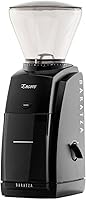
Baratza Encore: for simple controls and stepped recipes
The Encore suits someone who wants clear adjustment positions and direct control over grinding. Its pulse button is useful for brief runs, while the separate switch handles a longer run without holding the button.
It uses 40 mm hardened alloy steel conical burrs, and Baratza backs it with a 1-year warranty. Its appeal here is a straightforward routine rather than an automatic dose cycle.
Choose it when you want to learn how grind changes affect drip, pour-over or French press. Keeping notes on a few useful positions gives you a simple way to move between recipes.
Skip it if you expect the grinder to manage a timed batch for you. Also give espresso adjustment extra thought if an unpressurized basket will be your main brewing setup.
The body measures 5.91 x 5.12 x 13.39 in. Check overhead access as well as its narrow counter footprint, especially beneath low cabinets.
Cuisinart Supreme Grind DBM-8: for regular coffee-pot batches
The Cuisinart suits a household that regularly grinds enough coffee for a pot. Its separate selector covers 4 to 18 cups worth of grounds, with automatic shutoff at the end of the cycle.
The grounds chamber holds enough for up to 32 cups, but treat that as capacity rather than a reason to grind ahead. Freshly grinding the current batch keeps your dose and storage routine simpler.
It uses stainless steel flat burrs and includes a scoop, cleaning brush and cord storage. A safety interlock prevents operation unless the grinder is properly assembled.
Skip it if you mainly make small individual doses or want continuous espresso adjustment. Its batch selector is most useful when your regular brew amount matches that style of control.
The body measures 7 x 8.75 x 12.25 in, so allow for its width on a crowded counter. Cuisinart provides a limited 18-month warranty.
Fellow Opus 2: for espresso adjustments and changing coffees
The Opus 2 suits someone who wants to make small grind changes and move between brew methods. Its continuous adjustment gives you room to refine a recipe without being limited to fixed stops.
It has 48 mm conical burrs and a quick-reference grind guide beneath the lid. Use that guide to find a starting range, then record the position that works for your own coffee.
Fellow says its design minimizes retained grounds and static buildup. Those features are relevant when you change beans often, though weighing output remains useful when dose accuracy matters.
Its two magnetic catch cups serve coarser brewing and espresso transfer, with the espresso cup compatible with 54 mm and 58 mm portafilters. Check your portafilter size before making that transfer feature part of your plan.
Skip it if you prefer fixed positions that several people can recall easily. Continuous control adds flexibility, but it asks for closer notes when you switch recipes.
It measures 7.95 x 5.12 x 10.49 in and provides tool-free burr access. Fellow includes a standard 2-year warranty.
Burr coffee grinder vs blade grinder: which should you buy?
Buy a burr grinder when you want to adjust grind size and repeat the result. A blade grinder can suit occasional use when a lower initial cost matters more than recipe control.
With a blade grinder, running longer changes the mixture but does not create a controlled gap for beans to pass through. Fine powder can remain alongside larger pieces.
That matters most when you are trying to solve a brewing problem. If the texture changes unpredictably between batches, it becomes harder to tell whether your grind adjustment helped.
A burr grinder gives you a clearer reference point. Hold the coffee dose, water amount and brew process steady, then move the setting in one direction.
Our burr vs blade grinder comparison covers the trade-offs. For frequent brewing, repeatability is the stronger reason to move to burrs.
How do you choose a burr coffee grinder for espresso?
For espresso, prioritize small adjustments within a fine range, especially with an unpressurized basket. Water must pass through a compact coffee bed, so a small change can noticeably alter the shot.
An unpressurized basket relies heavily on grind and puck preparation to create resistance. A pressurized basket adds resistance through its design and is generally more forgiving of grind differences.
Among these options, the Opus 2 is the clearest fit when continuous adjustment is the deciding feature. Its dial lets you refine a position without having to jump to the next fixed stop.
The Encore's range includes espresso, but reaching a fine grind and dialing in a shot are separate questions. Read whether the Baratza Encore can grind fine enough for espresso before choosing it mainly for that job.
Keep dose, basket and preparation consistent while adjusting. If the shot runs much too quickly, a finer grind may help; if it barely flows, a coarser grind may help.
Change one variable at a time and judge taste as well as flow. A target shot time is a useful reference, but it does not guarantee a balanced drink.
If you switch between espresso and coarse brewing daily, write down both positions. Follow the grinder's instructions for large changes, since adjusting finer with beans between the burrs can require a specific procedure.
How should you set up a new burr coffee grinder?
Start with the manufacturer's assembly steps, a measured dose and a middle-of-range recipe for your brewer. A controlled first brew tells you more than changing several settings at once.
Make room for filling and emptying
Place the grinder on a stable, dry surface where you can reach the controls easily. Leave clearance for lifting the lid, removing the grounds container and accessing approved cleaning parts.
Check that removable parts are seated correctly before connecting power. Follow any instructions for cleaning food-contact parts before first use, and let washed parts dry fully.
Establish one repeatable recipe
Choose one coffee, one brew method and fixed amounts of coffee and water. Use your brewer's recipe or another clear starting recipe rather than guessing a new dose each morning.
Set the grinder within the recommended range for that method. Make the first brew without changing water temperature, pouring style or steep time midway through the process.
Record the setting, coffee amount and result. A short note such as “slightly sharp, try finer” is enough to make the next brew useful.
Calibrate timers and cup selectors
For a timer or cup selector, weigh how much ground coffee reaches the container. Adjust the control until the output fits your recipe, then note the position.
Repeat that check after a major grind change or a new bag of beans. A saved time or cup position is a convenient reference, not a weight measurement.
For weighed-dose use, compare the beans going in with the grounds coming out. A difference can reflect coffee remaining inside the grinder, so avoid assuming that input and output always match.
How do you adjust grind size when coffee tastes wrong?
Adjust grind size one small step at a time while holding the recipe steady. Taste points you toward a change, but strength and extraction are different problems.
Weak coffee can come from using too little coffee for the water, even when the grind is suitable. Check the dose before repeatedly moving finer.
Sharp, sour coffee may benefit from more extraction. If the dose and brewing process are sound, try a slightly finer grind and compare the next cup.
Harsh or dry bitterness may call for less extraction. Try slightly coarser grounds, while remembering that roast flavor and water temperature can also affect the result.
For pour-over, unexpectedly slow draining can point toward a grind that is too fine, though filter choice and pouring also matter. Keep your pouring method steady while comparing settings.
For French press, avoid chasing a completely sediment-free cup through grind changes alone. The metal filter allows some fine particles through, and pouring gently can help leave more sediment behind.
Cold brew is not improved simply by choosing the coarsest possible position. Use a grind suited to your recipe and filtration, then judge it alongside steep time and coffee-to-water ratio.
How should you clean and care for a burr grinder?
Keep the grounds path clear and remove coffee residue before it builds up or smells stale. Unplug the grinder before opening it for cleaning.
Check the grounds container and accessible chute regularly. Empty loose grounds and use a suitable dry brush on parts the instructions allow you to reach.
Clean more often if oily beans leave visible residue or if flavors carry over between coffees. There is no single schedule that fits both occasional use and a busy household.
Remove burrs only as directed, and note how they seat before taking them out. Incorrect reassembly can affect operation and grind adjustment.
Do not immerse the grinder or wash burrs unless the manufacturer expressly allows it. Wash removable hoppers and containers only by the approved method, then dry them completely before reassembly.
Avoid putting rice, spices or other materials through a coffee grinder unless its instructions permit that use. A coffee-only routine also helps prevent unwanted flavors in later brews.
If grinding stops, disconnect power before checking for an obstruction or an incorrectly seated part. Do not reach toward burrs while the appliance is connected.
For a fuller routine, follow our guide to how to clean a burr coffee grinder. Use the model's own instructions for disassembly and cleaning products.
Which buying and grinding mistakes should you avoid?
Avoid buying for unused features and changing too many brewing variables at once. Both make it harder to get value from the grinder you choose.
- Buying for a future espresso setup you may never use: Put your current daily brewer first unless the upgrade is a definite plan.
- Treating settings as a quality score: Look for useful adjustment near your recipe rather than the highest count.
- Filling every hopper to the top: Load an amount suited to how quickly you use the beans.
- Trusting cup markings as a measured dose: Check the output against your actual recipe.
- Grinding several days ahead: Use the grinder to prepare the amount you need for the current brew.
- Ignoring access beneath cabinets: Leave working space above and around the body.
- Expecting automatic stop to mean exact weight: Measure output when setting up the routine.
- Changing grind, dose and brew time together: Keep all but one steady so you can understand the result.
Also avoid choosing a grinder for a promised flavor profile based only on burr shape. Your beans, water, recipe and the grinder's full design all influence the cup.
Keep a few useful recipe notes instead of chasing a universal setting. A clear starting point makes a new bag easier to adjust.
Which burr coffee grinder should you choose?
Choose the burr coffee grinder that removes the most friction from your usual brew. Use the controls you will rely on every day as the deciding factor between these options.
Pick the OXO if you repeat a similar batch and want remembered grinding time. Pick the Baratza Encore if clear stepped positions and direct start-and-stop control suit you better.
Choose the Cuisinart if your normal job is grinding for a coffee pot with a cup selector. Choose the Fellow Opus 2 if continuous adjustment and switching between recipes are central to your routine.
Before ordering, write down your main brew method, normal dose and available counter space. Those three answers will rule out more unsuitable choices than another comparison of setting counts.
Once the grinder is in place, use our grind size chart for espresso to French press to choose a starting texture. Keep the recipe steady and refine one setting at a time.
Frequently asked questions
Is a burr coffee grinder better than a blade grinder?
A burr grinder is better for repeatable grind size because it crushes beans through an adjustable gap instead of chopping them with a blade; that control helps you adjust a recipe and return to a useful setting. A blade grinder can still suit occasional coffee when a lower initial cost matters most.
Do I need an espresso grinder for espresso?
For espresso with an unpressurized basket, choose a grinder that reaches a fine grind and allows small changes within that range; pressurized baskets are more forgiving. A grinder's espresso label does not establish how easily you can dial in your machine, so prioritize adjustment control over a broad range alone.
Are conical or flat burrs better for home coffee?
Neither burr shape is automatically better for home coffee; both can support useful grind adjustment, while the complete grinder determines your controls, workflow and cleaning access. Choose the model that fits your main brewing method rather than paying for a burr shape without a clear benefit to your routine.
How many grind settings should a coffee grinder have?
You need enough useful settings around your preferred brew method, rather than the highest total count. Drip and French press can work well with stepped adjustment, while espresso often needs smaller changes; setting numbers are specific to each grinder and cannot be compared directly across different models.
How often should I clean a burr coffee grinder?
Check the grounds path regularly and clean when residue builds up, smells stale or carries flavor between coffees; your cleaning schedule depends on use and bean oiliness. Unplug the grinder first, brush accessible dry parts, and wash only components the manufacturer permits you to wash.