What Is a Burr Grinder and How Does It Work?
A burr grinder is a coffee grinder that crushes beans between two textured surfaces called burrs. Adjusting the gap gives you control over grind size for your brew method.
On this page (9 sections)
- What is a burr grinder?
- How does a burr grinder work?
- What is the difference between a burr grinder and a blade grinder?
- Which grind size should you use?
- How should you choose a burr grinder?
- How do you set up a burr grinder for the first brew?
- Which burr grinder mistakes should you avoid?
- How do you keep a burr grinder working well?
- Is a burr grinder right for your coffee routine?
A burr grinder is a coffee grinder that crushes beans between two textured surfaces called burrs. Changing the gap between them lets you choose finer or coarser grounds for your brewer.
That control helps you repeat a good cup and correct one that tastes sour, bitter, or weak. For a wider look at features and brewing needs, see our complete burr coffee grinder buying guide.
What is a burr grinder?
A burr grinder uses an adjustable gap to control grind size, rather than relying mainly on how long you grind. Typically, one burr turns while the other stays in place.
Ridges on the burrs break beans into smaller pieces as coffee moves through the grinding chamber. The grounds leave through the gap and collect below.
Burr grinders come in electric and manual versions. An electric model handles the turning for you, while a manual grinder uses a crank and requires effort for each dose.
How does a burr grinder work?
A burr grinder works by feeding beans through burrs set a chosen distance apart. Bringing the burrs closer makes finer grounds; moving them apart makes coarser grounds.
Fine grounds expose more surface area to water. In brewers where water flows through a bed of coffee, they also tend to slow that flow, so grind changes can affect both extraction and brewing time.
What do a burr grinder's settings mean?
The settings mark positions within that grinder's adjustment range. Stepped grinders click between fixed positions, while stepless grinders let you move continuously between them.
Numbers aren't shared standards: setting 10 on one grinder won't necessarily resemble setting 10 on another. Start with the manufacturer's brew guide and record the position that works for your beans.
Does a burr grinder make every ground the same size?
No grinder makes perfectly identical grounds, but burrs give you more control over the mix of particle sizes. Some fine particles and larger pieces remain.
A wide spread can leave small particles extracting quickly while larger pieces extract slowly. More consistent grounds make it easier to change a recipe with purpose.
Conical burrs use a cone inside a ring, while flat burrs use facing discs. Read conical vs. flat burr grinders for the design differences, but choose by brewing needs before burr shape.
What is the difference between a burr grinder and a blade grinder?
A burr grinder offers a set grind size, while a blade grinder chops beans with a spinning blade. Running a blade grinder longer makes the overall mixture finer without setting a fixed gap.
Blade grinders can suit occasional coffee drinkers who prioritize low cost. A burr grinder makes more sense when you want to repeat a recipe or switch between brewing methods.
Both need cleaning, and neither can rescue stale beans or a poor coffee-to-water ratio. Our burr vs. blade coffee grinder comparison explains the tradeoffs.
Which grind size should you use?
Start with coarse for French press, medium for drip, and fine for espresso. These are starting points, since the beans, brewer, and recipe affect the right setting.
For pour-over, watch the flow as well as the flavor. An unusually slow brew can point to grounds that are too fine, though filter choice and pouring technique also affect drainage.
If coffee tastes sour and thin, try slightly finer; if it tastes bitter and drying, try slightly coarser. Keep the dose and water amount steady while you make that change.
Our coffee grind size chart gives visual starting points. For espresso, follow our espresso grind-size guide and make small changes, since a minor adjustment can change shot flow.
How should you choose a burr grinder?
Choose for your main brew method and daily routine, then compare adjustment and cleaning access. More numbered settings don't automatically mean a better grinder.
For drip and French press, clear controls and easy repeatability matter more than tiny adjustment steps. Traditional espresso puts greater demands on fine adjustment because you need to control resistance through a compact bed of coffee.
Decide how you'll measure coffee, too. Timed grinding and cup selectors are convenient, but weighing the grounds gives you a clearer way to repeat a dose.
If you change beans often, consider how single-dose coffee grinders work. Weighing beans for each brew avoids keeping a large supply in the hopper, though some coffee can remain inside a grinder.
Which grinder suits a repeat morning routine?
The OXO Brew Conical Burr Grinder suits households that want convenient repeat runs. Its one-touch timer remembers the last setting, so you don't need to reset the grinding time each morning.
It has 40 mm stainless steel conical burrs, 15 settings plus 43 micro-adjustments, and a removable 12 oz hopper. The UV-blocking tint shields beans from sunlight, but a hopper still shouldn't replace proper coffee storage.
Choose it if you usually brew the same coffee and want a simple starting routine. Weigh the output when you change beans, since the same grinding time can produce a different dose.
Skip it if traditional espresso is your main goal and continuous adjustment is a priority. A fine grind range alone isn't the same as precise control between espresso settings.
Which grinder suits simple manual control?
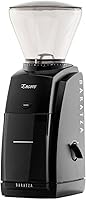
The Baratza Encore suits home brewers who want direct controls for daily coffee. Its front pulse button and on/off switch let you decide when grinding starts and stops.
It uses 40 mm conical burrs and offers 40 grind settings. That makes it a practical option for exploring drip, pour-over, and French press without learning continuous adjustment.
Choose it if you prefer to weigh your coffee and control the run yourself. Baratza backs the Encore with a 1-year warranty and support, which matters if help after buying is a priority.
Skip it if you want a remembered timer or your main task is fine-tuning traditional espresso. Before buying for that purpose, read whether the Baratza Encore can grind fine enough for espresso.
Which grinder suits a household coffee pot?
The Cuisinart Supreme Grind DBM-8 suits people who grind for a shared pot. Its slide dial selects grounds for 4 to 18 cups, and automatic shutoff ends the cycle.
It has stainless steel flat burrs, 18 grind positions, and a removable 8 oz bean hopper. The removable grounds chamber makes transferring a batch straightforward.
Choose it if you want a cup-based routine and a simple move away from blade grinding. Establish what the cup selector produces for your recipe, since a grinder's cup measure may differ from your mug size.
Skip it if you mainly make small, carefully weighed doses or need fine espresso adjustment. Its fixed positions and batch selector fit a different workflow from making tiny changes between shots.
Which grinder suits espresso and frequent bean changes?
The Fellow Opus 2 suits brewers who want continuous adjustment across several methods. Its stepless control lets you make small changes instead of moving between fixed clicks.
It has 48 mm conical burrs, automatic shutoff, and tool-free burr access. Fellow says its low-retention design minimizes coffee left inside, while anti-static technology reduces clinging grounds.
Two magnetic catch cups handle coarser grounds and espresso transfer, with the espresso cup compatible with 54 mm and 58 mm portafilters. These features suit a routine built around weighing individual doses.
Choose it if you switch beans or dial in espresso often. Skip it if you want clearly numbered clicks that several people can return to without carefully tracking a continuous dial position.
How do you set up a burr grinder for the first brew?
Start with correct assembly, a measured dose, and the recommended setting for your brewer. Put the grinder on a dry, level surface with enough overhead room to load beans.
Check that the hopper and grounds container are seated properly. Follow the manual when adjusting toward a finer setting, since some grinders require the motor to run during that change.
Grind only enough for your next brew and note the setting, dose, and result. Change one variable at a time so you can tell which adjustment helped.
Which burr grinder mistakes should you avoid?
Avoid chasing flavor with several changes at once. Changing grind size, coffee dose, and water amount together makes the result hard to interpret.
Don't assume a large hopper needs filling. Keep beans sealed away from heat and light, and load an amount that fits your routine.
Keep the grinder for coffee beans unless its manual allows other ingredients. Spices leave strong odors, and sugary or coated ingredients can leave deposits around the burrs.
How do you keep a burr grinder working well?
Keep it working well by removing old grounds and following its cleaning instructions. Coffee particles and oils collect around the burrs and chute, so care should match how much you grind.
Unplug an electric grinder before opening it for cleaning. Use a dry brush on the burrs, and wash removable parts only when the manual permits it.
Let any washed parts dry fully before reassembly. Don't force a jammed mechanism or poke tools into a powered grinder.
Our guide to how to clean a burr grinder covers routine care. For model-specific steps, follow the Baratza Encore cleaning guide or OXO grinder cleaning guide.
Is a burr grinder right for your coffee routine?
A burr grinder is the right choice when repeatable grind control matters to you. The practical answer to “what is a burr grinder?” is a tool that lets you adjust your coffee with purpose.
Pick OXO for a remembered morning routine, Encore for direct manual control, or Cuisinart for shared-pot batches. Choose Opus 2 when continuous adjustment and frequent dose changes fit your brewing.
Start with your main brewer, rather than a method you might try someday. Use the complete home buying guide to burr coffee grinders to compare the features that support that routine.
Frequently asked questions
What does a burr grinder do?
A burr grinder crushes coffee beans between two textured surfaces and controls their size through an adjustable gap. This lets you choose a grind suited to your brewer, then make small changes to taste.
It also makes it easier to repeat a recipe than grinding by time with a blade.
Is a burr grinder better than a blade grinder?
A burr grinder is the better choice for controlling grind size and repeating a coffee recipe. A blade grinder chops beans into a wider mix of fine particles and large pieces.
Choose burrs if you adjust your brewing; choose a blade grinder if low cost matters more than grind control.
Are conical and flat burrs different?
Conical burrs use a cone-shaped inner burr inside an outer ring, while flat burrs use two facing, toothed discs. Both designs grind coffee through an adjustable gap.
Choose by brew-method fit, adjustment, controls, and cleaning access first, since burr shape alone doesn't establish how well a grinder suits your routine.
What grind size should I use with a burr grinder?
Start coarse for French press, medium for many drip brewers, and fine for espresso. Follow your grinder's guide for an initial setting, then adjust in small steps.
Keep the coffee dose and water amount steady so you can judge what each grind change does to flavor and brew flow.