Conical vs Flat Burr Grinders: What Is the Difference? (October 2026)
The conical vs flat burr grinder difference is the grinding surfaces: a cone inside a ring versus two facing rings. Choose by brew method, adjustment control and dosing routine before burr shape.
On this page (9 sections)
- Conical vs flat burr grinder: how do the burrs differ?
- Does burr shape change the taste?
- Which burr style suits your brew method?
- Which of these three grinders fits your routine?
- Should you choose a hopper or single-dose workflow?
- How should you set up a new burr grinder?
- How do cleaning and care affect the choice?
- Which buying mistakes should you avoid?
- Conical vs flat burr grinder: which should you choose?
The conical vs flat burr grinder difference is the shape of the grinding surfaces: conical burrs use a cone inside a ring, while flat burrs use two facing rings. For buying, your brew method and dosing routine matter more than that label.
Choose a grinder that can make the grounds your brewer needs, then compare how you load beans, adjust the grind and collect each dose. These three options cover hopper-fed daily brewing, larger batches and weighed single doses.


Conical vs flat burr grinder: how do the burrs differ?
Conical burrs nest together; flat burrs face each other. Both break beans into smaller pieces as coffee passes through a controlled gap between cutting surfaces.
Changing that gap changes the grind size. A smaller gap generally produces finer grounds, while a larger gap produces coarser grounds.
Burr geometry includes more than the overall shape. Cutting edges, alignment and the path coffee takes through the grinder also affect the grounds, so two flat burr grinders need not behave alike.
How does a conical burr grinder differ from a flat burr grinder?
A conical grinder has an inner cone surrounded by an outer burr, rather than two facing discs. This arrangement describes its grinding mechanism, not its place in a quality ranking.
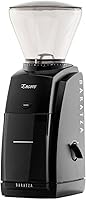
The OXO Brew uses 40 mm stainless steel conical burrs. Its useful buying features are the adjustment controls and hopper workflow, rather than any promise that a cone produces a certain flavor.
What makes flat burr grinders different from one another?
Flat burr grinders share a basic ring-shaped layout, but their intended jobs can differ sharply. Cuisinart Supreme Grind DBM-8 targets everyday home brewing with cup-based dosing, while Fellow Ode Gen 2 focuses on single-dose brewed coffee.
The Fellow uses 64 mm flat burrs with two-stage grinding geometry. Comparing that diameter with OXO's burr size doesn't establish a winner because the two shapes have different working surfaces.
Does burr shape change the taste?
Burr design can affect the grounds and flavor, but shape alone doesn't predict your cup. Avoid buying on a blanket promise that flat burrs always taste clearer or conical burrs always produce more body.
Every grinder produces a spread of particle sizes, rather than identical pieces. Smaller particles extract faster than larger ones, which makes the balance of those particles relevant to brewing.
Your beans, roast, water and recipe still matter. A grind adjustment that improves one coffee may need changing when you open a different bag.
For a useful comparison at home, keep the coffee dose, water amount and brewing method steady while changing the grind. Adjusting several things at once makes it harder to identify what improved the cup.
Our complete burr coffee grinder buying guide explains the other features that deserve attention before you choose a model.
Which burr style suits your brew method?
Both styles can suit brewed coffee; espresso requires a closer look at the exact grinder. Start with the drink you make most often, especially if you want one machine to cover several methods.
What should espresso drinkers prioritize?
Espresso drinkers should prioritize fine grinding and small, useful adjustment steps. Reaching a fine setting is only part of the job because small changes can have a large effect on how a shot flows.
OXO and Cuisinart describe ranges that include espresso, but that description doesn't establish how precisely either will match your coffee and espresso machine. Buyers using a conventional unpressurized basket should give adjustment control particular weight.
A pressurized basket is generally more forgiving of grind differences. If espresso is your main drink, choose around that need before considering convenience for occasional drip coffee.
Skip Fellow Ode Gen 2 for espresso. It is designed specifically for brewed coffee, even though other flat burr grinders may serve espresso well.
For help with the finer end of the range, see what grind size works best for espresso.
Which style works for pour-over and drip?
Either style can work for pour-over and drip, so choose the workflow you will use daily. A hopper suits a household making the same coffee repeatedly; a single-dose grinder suits someone weighing each brew.
For pour-over, useful adjustments let you respond when water drains too quickly or slowly. With drip coffee, keep the batch size steady while finding your preferred grind.
Use our coffee grind size chart as a starting point, then adjust for your beans and brewer. Setting numbers aren't universal across grinders.
What matters for French press and cold brew?
A suitable coarse range and enough capacity for your recipe matter more than burr shape. All three grinders here cover French press and cold brew.
Don't assume the coarsest setting is the correct one. Start with the grinder's guidance, then adjust based on flavor while holding steep time and dose steady.
Some sediment is normal with a metal French press filter. Making the grind extremely coarse to remove every fine particle can leave you with weak coffee instead.
Which of these three grinders fits your routine?
Choose OXO for a hopper-based daily routine, Cuisinart for shared batches, or Fellow for weighed brewed-coffee doses. Their controls separate them more clearly than the conical and flat labels.
OXO Brew: for a regular daily coffee routine
The OXO fits someone who usually keeps the same beans loaded and wants to repeat a familiar brew. Its one-touch timer remembers the last setting, which reduces setup for the next grinding cycle.
It offers 15 main settings plus 43 micro-adjustments and a removable 12 oz hopper. The finer adjustment points are useful when a main setting needs a small change.
The UV-blocking hopper tint helps shield beans from light, but it isn't a reason to fill the hopper beyond what you'll use soon. Store spare beans sealed, away from heat and direct sun.
Skip this workflow if you alternate between regular coffee, decaf and several origins throughout the day. A large hopper is most useful when you want beans ready to grind, rather than frequent changes.
Cuisinart Supreme Grind DBM-8: for a shared pot
The Cuisinart suits households that grind for a pot of coffee and want a cup-based control. Its 4 to 18 cup selector works with automatic shutoff, alongside 18 grind levels.
It has a removable 8 oz bean hopper and a grounds chamber with capacity for up to 32 cups. That chamber provides room for batch grinding, but brewing freshly ground coffee is still the better daily habit.
Treat the cup selector as a repeatable starting point, not a universal coffee recipe. Cup size and preferred strength vary, so weigh the output once you find a dose you like.
Skip it if your usual brew needs only a small amount of coffee below the selector's range. It also isn't the clearest match for someone whose main goal is precise espresso adjustment.
Fellow Ode Gen 2: for weighed doses and bean changes
The Fellow suits someone who measures beans before each brew and likes switching coffees. Its 100 g single-dose load bin holds the beans for the next batch rather than a standing supply.
It provides 31 settings for brewed coffee, with a grind guide under the lid and automatic shutoff when grinding is complete. Pour-over, drip, French press and cold brew are its intended uses.
Anti-static technology, a built-in knocker and a magnetically aligned catch cup address grounds collection. Fellow says its grind path reduces retained coffee, though you should still check your output when precise dosing matters.
Skip it if you want espresso or prefer to leave a hopper loaded for several grinding cycles. Before buying for large batches, weigh your usual recipe to check that it fits the load bin.
Should you choose a hopper or single-dose workflow?
Choose a hopper for convenience with one coffee, or single dosing for measured portions and frequent bean changes. Neither workflow depends on burr shape, as the two flat burr models here demonstrate.
A hopper saves you from loading beans before every brew. In return, changing coffees takes more planning because beans and some grounds may remain in the machine.
Single dosing adds a weighing and loading step. It lets you keep the rest of your beans in storage and makes it easier to record how much coffee went into each brew.
Weighing beans in doesn't always mean the same weight comes out immediately. Some grounds can remain inside a grinder and emerge during a later cycle.
If you're unsure about that extra step, our guide to single-dose coffee grinders explains the routine.
How should you set up a new burr grinder?
Start with a measured recipe and the recommended setting for your brew method. Follow the manual for assembly and adjustment, since grinders differ in how their burrs and controls should be handled.
- Choose a sensible location. Use a stable, dry surface with access to the hopper or load bin, not just space for the base.
- Check assembly. Seat removable parts correctly before switching on, and never bypass a safety interlock.
- Measure your recipe. Record the coffee weight, water amount and starting grind setting.
- Make one adjustment. Keep the rest of the recipe steady so you can judge the change.
- Write down the result. Save a useful setting for each coffee and brewer, rather than relying on memory.
For filter coffee, a fast brew that tastes thin or sour may benefit from a finer grind. A slow brew that tastes harsh or bitter may benefit from a coarser one, though pouring, temperature and beans can also affect those results.
Check the manual before moving toward a finer setting with beans between the burrs. Don't force an adjustment dial against resistance.
If switching methods leaves old grounds in the path, account for that carryover before judging the next brew. Follow the grinder's instructions for clearing it rather than assuming the first grounds reflect only the new setting.
How do cleaning and care affect the choice?
Cleaning access matters more than conical or flat geometry. A grinder that fits your routine should also be easy for you to empty, brush and reassemble correctly.
Unplug it before removing parts or reaching inside. Brush away loose grounds from accessible areas, and remove oily buildup according to the manufacturer's instructions.
Keep water away from the motor and burr chamber. Wash removable parts only when the manual permits it, then let them dry fully before reassembly.
After cleaning, check that the burrs and containers are seated correctly before changing your recipe. An assembly problem can look like a grind-setting problem.
Clean more often if oils and grounds build up, especially when using darker roasts. Our guide to cleaning a burr coffee grinder covers the basic care routine.
Which buying mistakes should you avoid?
Don't use burr shape, setting count or hopper size as a shortcut for overall suitability. Each tells you something useful, but none replaces matching the machine to your daily coffee.
- Buying flat burrs for future espresso: The Ode is the clear example of a flat burr grinder that excludes espresso.
- Counting settings without checking their purpose: More positions don't prove smaller steps in the range you need.
- Expecting a timer to measure coffee weight: Bean type and grind setting can change how much coffee a timed cycle produces.
- Filling the hopper simply because there's room: Capacity is a convenience, not a storage target.
- Ignoring loading clearance: Measure the space needed to add beans and remove containers, including room below cabinets.
- Changing the whole recipe after one poor cup: Adjust one variable so the next brew teaches you something.
If your current grinder uses a blade, the more useful first decision may be moving to burr grinding at all. Our burr vs blade grinder comparison explains that difference.
Conical vs flat burr grinder: which should you choose?
Choose the machine that fits your usual brew and dose before choosing a burr shape. Make espresso compatibility a firm requirement if that's your main drink, and rule out the Fellow for that job.
Pick OXO Brew when you want a loaded hopper and simple repeat grinding for daily coffee. Pick Cuisinart Supreme Grind DBM-8 when a shared pot and cup-based batch control define your routine.
Pick Fellow Ode Gen 2 when you want to weigh each dose, change beans often and make brewed coffee exclusively. Its workflow earns its place for that buyer, regardless of where it sits in a general comparison.
For your conical vs flat burr grinder decision, write down your main brewer, usual dose and how often you change beans. Then use our explanation of burr grinders and their parts to check the controls and terms that matter to your choice.
Frequently asked questions
Do conical burr grinders make better coffee?
Conical burr grinders don't automatically make better coffee than flat burr grinders. Both can produce grounds suited to home brewing.
The useful comparison is between specific models: their grind range, adjustment steps and dosing controls.
Beans, water and your brewing recipe also affect the flavor in your cup.
Are flat burr grinders better for espresso?
Flat burrs aren't automatically better for espresso. You need a grinder with an espresso-capable range and small enough adjustments to control shot flow.
Fellow Ode Gen 2 shows why shape isn't enough: it has flat burrs, but it's designed for brewed coffee and cannot serve as your espresso grinder.
Can you use a conical burr grinder for pour-over?
Yes, a conical burr grinder can suit pour-over when it provides the right grind range. Start with the manufacturer's brew guidance, then adjust while keeping your coffee dose and water amount steady.
A slow, bitter brew may need a coarser setting; a fast, thin brew may need a finer one.
Which burr grinder is easier to clean?
Cleaning access matters more than burr shape. Look for removable parts, clear reassembly instructions and a brush for dry grounds.
Cuisinart Supreme Grind DBM-8 has a removable hopper and grind chamber, while Fellow Ode Gen 2 includes a cleaning brush.
Unplug your grinder before removing parts or brushing inside.
What matters more, burr shape or grind settings?
A useful adjustment range matters more than burr shape when matching a grinder to your brewing method. The total setting count doesn't reveal how fine each step is or whether the grinder suits espresso.
Check the intended methods first, then choose controls that make your daily recipe easy to repeat.