8 Best Burr Coffee Grinder (October 2026)
The best burr coffee grinders for home brewing include the OXO Brew Conical Burr Grinder for everyday brewing, the Baratza Encore for first-time burr buyers, and the Baratza Encore ESP for espresso and filter.
On this page (8 sections)
- How we chose these burr coffee grinders
- The best burr coffee grinders for home brewing
- How do you choose the best burr coffee grinder for your brewer?
- How should you set up a new burr grinder?
- Which mistakes lead to weak, bitter or inconsistent coffee?
- How do you keep a burr grinder working well?
- Frequently asked questions
- Which best burr coffee grinder pick fits your routine?
The OXO Brew Conical Burr Grinder is the best burr coffee grinder for most home brewers because it combines flexible adjustment with simple repeat controls. Choose the Baratza Encore for manual operation, or the Encore ESP if you make espresso as well as filter coffee.
Start with the coffee you brew most often, then consider batch size and counter space. A grinder that fits your morning routine is a better buy than one with extra controls you'll rarely use.
Our picks at a glance
-
1

-
2

-
3
How we chose these burr coffee grinders
We compared adjustment design, dosing controls, capacity and cleaning access to match each grinder with a clear buying need. The order reflects overall home-brewing fit, while the individual recommendations explain when a lower-ranked option makes more sense.
Espresso adjustment matters more for an espresso machine than for a drip brewer. Likewise, a cup selector helps a household filling a pot, while a smaller body can matter more to someone brewing a single mug.
For the basic differences between grinder types and routines, start with our complete home buying guide to burr coffee grinders.
| Product | Best for | Grind adjustment | Bean hopper | Burrs | Our score |
|---|---|---|---|---|---|
| OXO Brew Conical Burr Grinder | everyday brewing | 15 settings plus 43 micro-adjustments | 12 oz | 40 mm stainless steel conical | 9.1 |
| Baratza Encore | first-time burr buyers | 40 settings | 40 mm hardened alloy steel conical | 8.9 | |
| Baratza Encore ESP | espresso and filter | Micro 1–20; macro 21–40 | 40 mm hardened alloy steel conical | 8.6 | |
| Cuisinart Supreme Grind DBM-8 | shared coffee pots | 18 settings | 8 oz | 8.4 | |
| OXO Brew Compact Conical Burr | small kitchens | 15 settings plus 29 micro-adjustments | 50 g | 8.3 | |
| Baratza Virtuoso+ | repeat morning brews | 40 settings | M2 conical steel | 8.2 | |
| Breville Smart Grinder Pro | programmed coffee routines | 60 settings | 8.1 | ||
| Fellow Opus 2 | espresso fine-tuning | Stepless | 48 mm conical | 7.9 |
The best burr coffee grinders for home brewing
Choose the OXO Brew Conical Burr Grinder for a flexible daily setup. The alternatives below solve more specific needs, including espresso adjustment, shared coffee pots and limited kitchen space.
OXO Brew Conical Burr Grinder: Best for everyday brewing
- 40 mm stainless steel conical burrs
- 15 settings plus 43 micro-adjustments
- 12 oz bean hopper
- One-touch start remembers last setting
A roomy hopper and remembered grind time suit households that repeat the same brew each morning. Fine adjustments also leave room to change methods.
Pros
- Small adjustments between main settings
- Room for batch brewing
- One-touch timer remembers its setting
Cons
- Takes more space than the OXO Compact
- Espresso buyers should prioritize fine adjustment control
The OXO Brew Conical Burr Grinder suits households that want fresh grounds without rebuilding their routine each morning. Its one-touch timer remembers the previous setting, so repeating a familiar brew takes little adjustment.
You get 15 settings plus 43 micro-adjustments, with a 12 oz hopper for beans. That combination suits a regular drip pot while leaving room to change grind size for other methods.
The UV-blocking hopper tint is useful in a bright kitchen, but it doesn't replace sensible bean storage. Load what you'll use soon and keep the rest sealed away from heat and light.
Choose this OXO if several people drink the same beans and you want straightforward daily operation. Skip it for the Compact if space is your main limit, or choose an espresso-focused option if small changes in shot flow will drive your buying decision.
When you change beans or grind size, check the weight of the grounds again before relying on the remembered time.
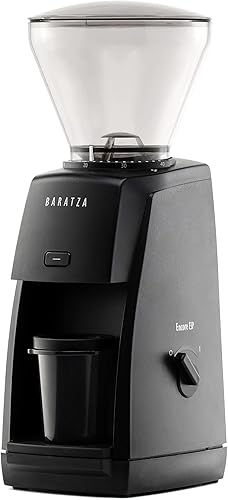
Baratza Encore: Best for first-time burr buyers
- 40 grind settings
- 40 mm hardened alloy steel conical burrs
- Front-mounted pulse button
- ON/OFF switch
Direct controls make the Encore a sensible starting point for daily filter coffee. Choose the ESP instead when fine espresso adjustments drive the decision.
Pros
- Simple manual operation
- Fixed settings are easy to record
- Baratza provides a 1-year warranty
Cons
- Requires you to stop the grind
- Lacks the ESP's dedicated espresso adjustment range
The Baratza Encore is a good fit for your first burr grinder if you want direct control over when grinding starts and stops. A front-mounted pulse button and ON/OFF switch keep operation simple.
Its 40 fixed settings make it easy to note a starting point for drip, pour-over or French press. Record the setting alongside your coffee dose so you can return to a useful recipe.
The Encore uses hardened alloy steel conical burrs, and Baratza backs it with a 1-year warranty. Choose it if you prefer a switch and a scale to programming a timer.
Skip the standard Encore if espresso is the main reason you're upgrading. The ESP's dedicated fine adjustment range is the more relevant feature for that job.
Our Baratza Encore review explains the controls, while the Baratza Encore setting guide helps you choose an initial setting without treating it as a fixed recipe.
Baratza Encore ESP: Best for espresso and filter
- Dual-range adjustment
- Micro-steps from 1 to 20 for espresso
- Macro-steps from 21 to 40 for filter
- Quick-release burr
Dedicated espresso steps make this the clearer Baratza choice for a home with an espresso machine and a filter brewer. Quick-release burr access also simplifies routine care.
Pros
- Fine steps reserved for espresso
- Separate filter brewing range
- Tool-free burr removal
Cons
- Espresso range adds little for filter-only buyers
- Fixed steps rather than continuous adjustment
The Baratza Encore ESP is the clearest choice here for someone who makes espresso during the week and filter coffee on weekends. Its adjustment system gives each task its own range.
Settings 1–20 use micro-steps for espresso, while 21–40 use broader steps for filter brewing. Small changes at the fine end help you adjust shot flow without making an unnecessarily large jump.
The quick-release burr mounting allows tool-free removal for cleaning. You can also choose between a grounds bin for larger batches and an espresso dosing cup for transferring grounds into a portafilter.
Buy the ESP if an espresso machine is already part of your setup or a firm next step. Skip it if you only brew filter coffee and prefer the standard Encore's simpler buying case.
When switching methods, write down your useful settings for each bean. Returning to a number is a starting point, and the next brew still tells you whether a small adjustment is needed.
Cuisinart Supreme Grind DBM-8: Best for shared coffee pots

- 18 grind levels
- 8 oz removable bean hopper
- Cup selector for 4 to 18 cups
- Automatic shutoff
The cup selector and automatic stop suit households that fill a coffee pot each morning. Its batch controls are less useful for small, individually weighed doses.
Pros
- Cup-based batch selection
- Removable hopper and grounds chamber
- Stops when the cycle ends
Cons
- Fewer grind levels than several alternatives
- Cup selector starts at 4 cups
The Cuisinart Supreme Grind DBM-8 suits a household that makes a shared pot rather than a series of small, weighed doses. Its 4–18 cup selector sets a batch, and automatic shutoff ends the cycle.
An 8 oz removable hopper feeds stainless steel flat burrs with 18 grind levels. The removable grounds chamber makes it practical to transfer a batch into a brewer.
Treat the cup selector as a convenient starting point rather than a coffee recipe. Brewer cup marks and drinking mugs aren't the same size, so weigh an initial batch and adjust to your preferred strength.
Choose the Cuisinart for a repeat pot-brewing routine where cup-based controls make sense. Skip it for espresso fine-tuning or if you usually grind a small dose for one mug.
The chamber can hold more grounds than you need for one brew. Empty it after use rather than grinding ahead simply because there's room.
OXO Brew Compact Conical Burr: Best for small kitchens

- 15 settings plus 29 micro-adjustments
- 50 g bean hopper
- 3.75 x 3.75 x 10.75 in
- Upper and lower burrs come apart for cleaning
A narrow body suits kitchens where the grinder must share space with a brewer and kettle. The smaller hopper favors modest batches over repeated full-pot brewing.
Pros
- Small counter footprint
- Pouring spout on grounds container
- Accessible burrs for cleaning
Cons
- Larger batches may require refilling
The OXO Brew Compact Conical Burr is the practical choice when a full-size grinder would crowd your brewer or kettle. Its body measures 3.75 x 3.75 x 10.75 in, with a 50 g bean hopper.
The smaller capacity suits modest batches, but work from your recipe's coffee weight rather than a promised number of cups. A stronger brew uses more beans for the same amount of water.
It offers 15 settings plus 29 micro-adjustments, and the grounds container has a pouring spout. The chuteless design and removable upper and lower burrs give access for cleaning.
Choose it for a small kitchen or a setup that gets put away between brews. Skip it if you regularly need more coffee than the hopper holds and don't want to refill mid-routine.
OXO directs you to wipe the body and hopper with a soft, damp cloth. Wash the grounds container separately and dry it thoroughly; our burr grinder cleaning guide explains broader care habits.
Baratza Virtuoso+: Best for repeat morning brews

- 40 grind settings
- 40-second digital timer adjustable to a tenth of a second
- Backlit grounds bin
- M2 conical steel burrs
An adjustable digital timer suits brewers who want to repeat a familiar dose by time. The illuminated bin helps you see the grounds as they collect.
Pros
- Fine timer adjustment
- Backlit grounds bin
- Fixed grind settings
Cons
- Timed output still needs a weight check after changes
- Less useful if you weigh every dose before grinding
The Baratza Virtuoso+ suits someone who uses the same beans and brew recipe most mornings. Its 40-second digital timer adjusts in 0.1-second increments, allowing small changes to grind duration.
A backlit grounds bin helps you see what has collected, while 40 grind settings cover different brewing methods. M2 conical steel burrs handle the grinding.
The timer is useful after you've established how long your usual dose takes. Weigh the output while setting it up, then check again when you change beans or grind size.
Choose the Virtuoso+ if repeating a grind time is more convenient than watching a manual grind. Skip it if you weigh each dose before grinding and don't need a timer to portion beans from a filled hopper.
Its display controls duration, not coffee weight. Fine time adjustment helps refine a routine, but a scale remains the way to confirm how much coffee reaches the brewer.
Breville Smart Grinder Pro: Best for programmed coffee routines

- 60 grind settings
- Grind time adjusts in 0.2-second steps
- LCD shows setting, time and selected shots or cups
- Grinds into a portafilter or container
A display, programmable time and several grinding destinations suit buyers who want more control over their routine. Allow space for its taller body and hopper access.
Pros
- Displays grind and dose settings together
- Programmable grind time
- Includes 2 portafilter cradle sizes
Cons
- More controls to learn
- Taller than several other picks
The Breville Smart Grinder Pro suits buyers who want visible settings and several ways to collect their grounds. Its LCD shows grind setting, duration and the selected number of shots or cups.
You get 60 grind settings and programmable time in 0.2-second increments. It can grind into a portafilter, container, gold-tone basket or paper filter.
Included portafilter cradles cover 50–54 mm and 58 mm sizes. This makes it worth considering if you want to grind at the espresso station rather than always transfer from a separate bin.
Choose it if you'll use the display and programmed controls regularly. Skip it if a switch is all you want or if the 15.33 in height leaves too little room beneath your cabinets.
Allow clearance above the grinder to add beans, and confirm the first dose by weight. A selected shot or cup count still needs to match your own basket, beans and recipe.
Fellow Opus 2: Best for espresso fine-tuning

- 48 mm conical burrs
- Stepless grind adjustment
- Designed for espresso through cold brew
- Two magnetic catch cups included
Continuous adjustment suits espresso drinkers who want to move between fixed grind steps. Magnetic catch cups support both espresso transfer and coarser brewing.
Pros
- Continuous grind adjustment
- Anti-static design
- Tool-free burr access
Cons
- Small dial changes need careful notes
- Continuous adjustment may be unnecessary for simple drip routines
The Fellow Opus 2 suits an espresso drinker who wants to adjust between fixed steps. Its stepless dial moves continuously, giving you small changes when one setting flows too quickly and a slightly finer position is needed.
It uses 48 mm conical burrs and includes 2 magnetic catch cups. The espresso cup works with 54 mm and 58 mm portafilters for transferring grounds.
Fellow says its design minimizes retention and static buildup. Those features target carryover between brews and grounds that cling or scatter, but weighing output is still useful when you change beans.
Choose the Opus 2 if continuous adjustment is a feature you'll use. Skip it if you prefer obvious fixed stops for switching among household recipes.
Keep notes or a photo of useful dial positions so small changes are easier to retrace. Tool-free burr access also helps make cleaning part of the routine rather than a task you keep putting off.
How do you choose the best burr coffee grinder for your brewer?
Choose around your main brew method first, then the dose controls and size you need. A broad fine-to-coarse range matters less than useful control in the part of that range you use daily.
Which burr coffee grinder adjustment suits espresso?
For espresso, prioritize small changes near the fine end. Water passes through a compact coffee bed under pressure, so a small grind change can make a large difference to flow.
A grinder that reaches a fine texture isn't automatically the best choice for adjusting espresso. The Encore ESP's dedicated range and the Opus 2's continuous dial address that adjustment need in different ways.
Stepped adjustment makes positions easy to record. Stepless adjustment gives you positions between steps, but you need to pay closer attention when returning to a previous recipe.
What matters most for drip, pour-over and French press?
For filter coffee and French press, prioritize repeatable grind changes and a dose routine you'll actually follow. You don't need to choose espresso controls simply because they offer more detail.
Drip and pour-over generally need a medium-range starting point, while French press generally uses a coarser grind. Use the cup's flavor and the brewer's behavior to refine that starting point.
For pour-over, very fine grounds can slow the drawdown, but pouring technique and filter choice also matter. Keep those steady while adjusting the grinder so you can identify what changed.
Burr shape alone doesn't decide the purchase. Our guide to conical and flat burr grinders explains that distinction without making it the only buying factor.
Should you choose a hopper or measured-dose routine?
Choose a filled-hopper routine if you use one coffee often and want quick repeat brews. Measure beans for each brew if you switch coffees frequently or want to keep most of your supply sealed.
Hopper capacity isn't a freshness target. A large hopper gives you room for batches, but you don't have to fill it every time.
Timers portion coffee by grinding duration, while weighing measures the dose itself. For a closer look at weighing beans before each brew, read our single-dose coffee grinder guide.
How much counter space should you allow?
Measure the grinder's footprint and leave room to remove the grounds container. Check overhead clearance for opening the hopper, not just whether the body fits beneath a cabinet.
Keep space nearby for the scale, brewer and transferring grounds. A compact grinder loses some of its practical benefit if its container is awkward to lift or pour in the available space.
How should you set up a new burr grinder?
Start with one bean, one brewer and one repeatable recipe. Establish a useful grind before changing several parts of your coffee routine.
- Follow the setup instructions. Check that the burrs, hopper and grounds container are correctly seated before adding beans.
- Weigh a dose. For filter coffee, about 60 g of coffee per liter of water is a useful starting ratio.
- Choose an initial grind. Use the brand's guidance for your method, then refine it with your actual brewer.
- Brew and note the result. Record coffee weight, water amount, grind position and the main flavor problem.
- Change one thing. Make a small grind adjustment while keeping the dose and brew method steady.
For espresso, begin with your basket or machine's recommended dose and a measured beverage yield. Keep both steady while adjusting grind size to change flow.
Check the manual before changing to a finer setting, especially with beans inside. Forcing an adjustment dial can put unnecessary strain on the mechanism.
If you use a timer, weigh several outputs while finding a useful duration. Recheck it after changing grind size or coffee, since the same number of seconds can produce a different dose.
Which mistakes lead to weak, bitter or inconsistent coffee?
The most common mistake is changing grind size and coffee dose together. Keep one steady while adjusting the other so the next cup gives you useful information.
Using grind size to fix every flavor problem
A finer grind often increases extraction, while a coarser grind often reduces it. Sour or thin coffee can justify a finer adjustment, and harsh or dry coffee can justify going coarser.
Those are starting clues, not firm diagnoses. Roast flavor, water, temperature and brewing technique also affect the cup, so don't keep moving finer if the brewer is clogging or struggling to drain.
Assuming a timer measures coffee weight
A timer repeats duration, not grams. Switching beans or grind settings can change how much coffee comes out during that time.
Check weight when establishing the routine and after a meaningful change. The same rule applies to cup-based selectors: confirm the dose against your brewer instead of assuming the label matches your mug.
Using one grinder number as a universal recipe
A setting number belongs to a particular grinder and setup. A useful setting on one model doesn't translate directly to another model, even if both dials show the same number.
Online starting points help you get close. Keep notes on your own brewer, then adjust from the result rather than chasing someone else's exact position.
Grinding extra coffee for convenience
Grind what you plan to brew soon. Ground coffee exposes much more surface area to air than whole beans, so filling a large grounds chamber for later gives up part of the reason to grind fresh.
If mornings are rushed, weigh beans ahead and keep them sealed. Grind them when you're ready to brew.
How do you keep a burr grinder working well?
Keep old grounds out and moisture away from the grinding mechanism. Unplug the grinder before cleaning, and follow its own instructions for disassembly and reassembly.
Brush accessible burr surfaces and the exit area as directed. Empty the grounds container after brewing so old grounds don't mix with the next dose.
Don't assume removable burrs are washable. Use water only on parts the brand approves for washing, and let those parts dry completely before putting them back.
Set a cleaning reminder based on how much coffee you grind and the brand's care schedule. If output slows or grounds build up, stop and inspect the grinder rather than forcing more beans through.
A sudden change in grind or output can also mean a part isn't seated correctly after cleaning. Recheck assembly before changing your whole brew recipe.
Frequently asked questions
Choose around brew method and daily routine before comparing extra features. These answers address the common questions that remain after narrowing the shortlist.
Is a burr grinder better than a blade grinder?
A burr grinder is the better choice for repeatable grind-size adjustment. Burrs crush beans through a set gap, while a blade chops them, making it harder to control the mix of fine and coarse pieces.
Read our burr vs blade grinder comparison if you're deciding whether the change suits your coffee routine.
Can a burr coffee grinder grind for espresso?
Yes, but choose useful fine adjustment rather than a fine-grind label alone. Traditional espresso baskets can need small changes to control flow, while pressurized baskets are generally more forgiving.
Our guide to the best grind size for espresso explains how to choose a starting point and adjust from the shot.
Should you leave beans in a grinder hopper?
Load an amount you'll use soon and keep the rest sealed away from heat and light. A hopper is convenient feeding space, but it doesn't require you to store your whole bag there.
If you switch between regular and decaf, measuring each brew can make the routine easier to track.
How often should you clean a burr grinder?
Use the brand's schedule as your starting point and adjust for how much coffee you grind. Empty the container regularly and remove buildup before it affects the flow of grounds.
Our guide to cleaning a burr coffee grinder covers the process, including which cleaning decisions depend on your model.
Which best burr coffee grinder pick fits your routine?
Choose the OXO Brew Conical Burr Grinder if you want an easy repeat routine for everyday home brewing. Pick the Baratza Encore if manual controls appeal more, or the Encore ESP when espresso and filter coffee share the kitchen.
For a tight counter, choose the OXO Compact. For a shared pot, choose the Cuisinart, provided cup-based batch selection matches how you brew.
The Virtuoso+ suits repeating a familiar timed dose. Choose the Breville for programmed controls and different grinding destinations, or the Opus 2 if continuous espresso adjustment is your priority.
The best burr coffee grinder is the one that makes your main brew easier to repeat. Before ordering, settle on the brewer, dose routine and available space rather than buying features for a method you might never use.
Read what a burr grinder is and how it works if you need the basics. If espresso is the deciding factor, use our best coffee grinders for espresso shortlist as your next comparison.
Our top 3 picks at a glance
-
1
-
2
-
3
Frequently asked questions
What makes a burr coffee grinder a good choice?
A good burr coffee grinder gives you useful grind adjustments, repeatable controls and access for cleaning. Burrs crush beans between set surfaces rather than chopping them with a blade.
Match the adjustment design to your main brewer, then check that the batch capacity and counter space suit your kitchen.
Which burr grinder is best for most home brewing?
The OXO Brew Conical Burr Grinder is the best choice for most home brewers who want flexible adjustment and a simple repeat routine. The Baratza Encore suits buyers who prefer manual controls.
Choose the Encore ESP when espresso is a regular part of your coffee routine.
Can one burr grinder handle espresso and French press?
Yes, a grinder with a suitable range can serve both methods, but espresso also needs fine control within that range. The Encore ESP separates espresso and filter adjustments, while the Fellow Opus 2 adjusts continuously.
Use our coffee grind size chart to choose starting textures for each brewer.
How many grind settings do you need?
You need enough useful adjustments for your brewer, rather than the largest number on the box. Filter brewing usually allows broader changes than espresso.
For espresso, small changes near the fine end matter most, so check how the adjustment works rather than comparing total settings alone.
How should you maintain a burr grinder?
Unplug the grinder before cleaning and follow the brand's instructions for removing burrs and other parts. Brush away trapped grounds, empty the grounds container and keep parts dry before reassembly.
Our guide to cleaning a burr coffee grinder explains how to build a care routine around your model.