Can the Baratza Encore Grind Fine Enough for Espresso?
Using the Baratza Encore for espresso can work with some setups, especially pressurized baskets, but adjustment between settings is its main limit. Choose the Encore ESP for regular espresso brewing or the ESP Pro for stepless control and added dosing modes.
On this page (9 sections)
- Can the Baratza Encore grind fine enough for espresso?
- Why does your espresso basket affect the choice?
- Why can the Encore be hard to dial in for espresso?
- Is the Encore ESP a better choice for espresso?
- What does the Encore ESP Pro add?
- How should you set up and dial in your shots?
- What care and common mistakes matter most?
- What should you do if espresso shots won't dial in?
- Which Baratza Encore should you choose for espresso?
The Baratza Encore for espresso can work with some setups, but its adjustment steps are the main limit. If you're buying primarily for espresso, the Encore ESP is the more suitable choice because it offers smaller changes in its espresso range.
Already have a standard Encore? Check your basket type and try a repeatable recipe before replacing it, since a forgiving setup may work with the settings you have.
Can the Baratza Encore grind fine enough for espresso?
Yes, the Encore can reach espresso-fine grounds, but that doesn't mean every coffee will dial in well. You need both a fine enough grind and a useful setting between a shot that rushes through and one that barely flows.
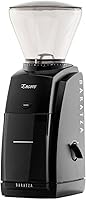
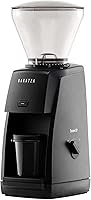
The standard Encore has 40 grind settings and 40 mm conical steel burrs. Its front pulse button and on/off switch keep operation simple, while a hopper twist selects the grind.
It suits someone who mainly makes drip coffee, pour-over, or French press and wants occasional espresso. Skip it as a new espresso-first purchase if you expect to make small flow adjustments with a nonpressurized basket.
A broad grind range and fine adjustment solve different problems. Our guide to how a burr grinder works explains why burrs matter, but the adjustment system also deserves attention when choosing for espresso.
Why does your espresso basket affect the choice?
A pressurized basket is generally more forgiving of grind size, while a nonpressurized basket places more demands on the grinder. Identify yours before deciding whether the standard Encore makes sense.
Pressurized baskets use a restricted outlet to help create resistance. That makes them a more practical match for occasional espresso with a grinder whose settings cover several brewing methods.
With a nonpressurized basket, the coffee puck provides much of the resistance to water. Grind size, dose, and even preparation therefore have a larger effect on flow.
Check your machine's manual rather than guessing from the machine's size or appearance. If it accepts both basket types, decide which you'll actually use before choosing a grinder.
Milk drinks don't remove this distinction. Milk can soften strong flavors, but you still need a workable shot recipe underneath it.
Why can the Encore be hard to dial in for espresso?
The Encore can be difficult to dial in because one adjustment step may be too large for the change your shot needs. One setting might run quickly, while the next finer setting slows the shot too much.
That gap matters most once your dose and preparation are consistent. If those change with every attempt, you can't tell whether the setting or the routine caused the result.
Different beans can also need different settings, and the same coffee may need adjustment as it ages. Finding a useful setting for one bag doesn't guarantee the next bag will suit it.
A small dose change can sometimes help bridge a gap, provided it stays within your basket's recommended range. Don't keep adding coffee to compensate for a grind that's too coarse, since an overfilled basket creates another problem.
Where should you start with the Baratza Encore for espresso?
Start near the fine end of the range, using your machine's instructions as your first guide. A setting number is a starting point, not a recipe that works for every Encore and espresso machine.
Use the same beans while dialing in, and write down the grind setting, coffee dose, drink weight, and shot time. These notes let you return to a useful starting point after brewing another way.
Our espresso grind-size guide explains flow adjustments, while the coffee grind-size chart puts espresso alongside other brew methods.
Is the Encore ESP a better choice for espresso?
The Encore ESP is the better fit for regular espresso brewing because it divides its adjustment range into espresso and filter sections. Settings 1–20 use micro-steps, while 21–40 use larger steps for filter coffee.
It also has hardened alloy steel burrs, a quick-release burr mount for tool-free removal, and a choice of a grounds bin or espresso dosing cup. The cup provides a way to transfer grounds into a portafilter.
Choose it if you want smaller grind changes without giving up numbered settings. Those marks are useful when recording recipes or moving between espresso and filter brewing.
Skip it if you're happy with the standard Encore for filter coffee and have no real espresso plans. If you specifically want continuous adjustment or automatic dosing modes, consider the Pro instead.
Our Baratza Encore vs Encore ESP comparison covers the main choice, and the Encore ESP review takes a closer look at that model. For alternatives beyond this family, compare espresso grinders for home.
What does the Encore ESP Pro add?
The Encore ESP Pro adds stepless adjustment and hands-free dosing modes for people who want more control over their routine. You can make continuous grind changes rather than choosing between fixed steps.
Single Dose Mode offers auto-stop grinding, while Timer Mode allows adjustments in 0.1-second increments. Timed grinding controls how long the motor runs, so use a scale to check the actual coffee dose rather than assuming time equals weight.
The Pro includes a quick-release burr system and active anti-static technology, which Baratza says reduces static mess. Baratza also says its removable flow control disk helps keep bean flow consistent throughout a dose.
Choose it if you enjoy fine adjustments and want automatic stopping or timed dosing. Skip it if you prefer a simple numbered setting and don't need those extra controls.
Stepless adjustment also makes careful notes useful when switching between espresso and coarse brewing. Our guide to single-dose coffee grinders explains the routine if you prefer weighing beans for each drink.
How should you set up and dial in your shots?
Start with one repeatable recipe, then change the grind while holding the other inputs steady. Follow your machine's guidance for basket dose and use a scale to measure both dry coffee and the finished drink.
- Check the basket. Use a dose within its recommended range, with enough space above the prepared puck.
- Prepare evenly. Distribute the grounds across the basket and tamp level so water has fewer easy paths through the coffee.
- Choose a target yield. For a conventional nonpressurized double, twice the dry coffee weight is a common starting point, subject to your machine's guidance.
- Watch flow and taste. If the shot races through and tastes thin or sour, try finer; if it barely flows and tastes harsh, try coarser.
- Repeat before judging. Confirm that a change gives a similar result on another shot before changing something else.
Shot time is a useful note, but it isn't a pass-or-fail number. An uneven puck can produce fast flow even with fine grounds, so check preparation before making a large adjustment.
After changing settings, some grounds from the previous setting may remain inside a grinder. Follow the model's instructions for clearing them so your next dose better reflects the new setting.
What care and common mistakes matter most?
Keep the burr area and grounds path clear, and follow the grinder's cleaning instructions. Before removing parts for cleaning, unplug it and let moving parts stop.
Brush away loose grounds with suitable dry tools. Don't put water into the burr chamber or wash parts unless the manual allows it, and let any washable parts dry fully before reassembly.
Our guide to cleaning a Baratza Encore covers routine care. After reassembly, check that removable parts are seated correctly before judging a sudden change in grind or flow.
Avoid changing grind, dose, and drink weight together. You may get a different shot, but you won't know which change helped.
Also avoid treating a timer as a scale or chasing a fixed shot time regardless of taste. Weigh the output, keep notes, and judge the drink at a consistent recipe.
What should you do if espresso shots won't dial in?
Check dose, basket fit, and puck preparation before blaming the grinder. Repeat a shot at the same setting to see whether the problem is consistent or varies from one attempt to the next.
If the same recipe swings between fast and slow shots without a grind change, work on consistency first. Inspect the basket and machine's water path according to their care instructions, too.
If results are repeatable but adjacent settings remain too fast and too slow, the Encore's adjustment gap may be the limit. That's a clear reason to consider finer espresso adjustment.
If you already have an Encore, our Baratza Encore settings guide can help you record starting points across brew methods.
Which Baratza Encore should you choose for espresso?
Choose based on your basket and daily routine: the standard Encore for filter-first brewing with occasional forgiving espresso, the ESP for regular espresso, or the Pro for continuous adjustment and added dosing controls.
Keep using a Baratza Encore for espresso if it already gives you repeatable shots you enjoy. An upgrade makes more sense when you've identified a specific limit, such as being stuck between 2 settings.
For a new nonpressurized espresso setup, choose the ESP unless you specifically want the Pro's controls. Compare best budget espresso grinders for other options, or read what grind size is best for espresso before dialing in your first recipe.
Frequently asked questions
Can the Baratza Encore grind fine enough for espresso?
The Baratza Encore can grind fine enough for some espresso setups, but reaching a fine grind isn't the same as dialing in a shot. Its stepped adjustment may leave a gap between useful settings.
A pressurized basket is generally more forgiving than a nonpressurized basket that relies on the coffee puck for resistance.
What Encore setting should I use for espresso?
Start near the fine end of the range, following your machine's guidance, then adjust one step at a time. Keep the coffee dose and target drink weight steady while comparing results.
No single number suits every bean, basket, and machine, so record the setting alongside your recipe and shot time.
Is the Encore ESP better for espresso than the Encore?
Yes, the Encore ESP is the better choice when espresso is your main brew method because its settings 1–20 provide smaller adjustment steps. Settings 21–40 cover filter brewing.
Choose it if you want finer control while keeping numbered settings you can record and return to when changing brew methods.
Should I buy a Baratza Encore for espresso?
Buy the standard Encore mainly for mixed brewing, especially if your occasional espresso uses a pressurized basket. For a new setup centered on nonpressurized espresso, choose the Encore ESP instead.
If you already have an Encore, check your basket and try a consistent recipe before deciding you need another grinder.