Coffee Grind Size Chart: Espresso to French Press
Use a coffee grind size chart to start fine for espresso, medium for drip and pour over, and coarse for French press. Keep your recipe steady, then adjust the grind using both brew flow and taste.
On this page (7 sections)
- How do you use a coffee grind size chart?
- What do fine, medium, and coarse grounds change?
- How should you adjust grind size for each brew method?
- Which grinder suits your daily brewing routine?
- How should you set up and care for a grinder?
- Which grind size mistakes waste the most coffee?
- Which coffee grind size and grinder should you choose?
A coffee grind size chart helps you start fine for espresso, medium for drip and pour over, and coarse for French press. Use those ranges as starting points, then follow your brewer's recipe and adjust for taste.
| Brew method | Starting grind size | Visual guide and brewing clue |
|---|---|---|
| Espresso | Fine | Finer than table salt; small changes affect shot flow |
| AeroPress | Fine to medium | Start medium-fine unless your recipe says otherwise |
| Pour over | Medium | Sandy texture; adjust for drainage and taste |
| Drip coffee | Medium | Like sand; follow guidance for your filter basket |
| Chemex | Medium-coarse | Between sand and coarse salt; allow for its thick paper filter |
| French press | Coarse | Like coarse sea salt; some sediment is normal |
| Cold brew | Coarse | Large particles that are easier to strain after a long steep |
Particle comparisons are rough guides, not measurements. Table salt and sand vary, and two coffees can look similar while brewing differently.
How do you use a coffee grind size chart?
Use the chart to choose your first grind, then change only the grind until you understand its effect. Keep the coffee dose, water amount, temperature, and brewing steps steady.
Write down your starting setting before moving the dial. Make one small change, brew again, and compare the flavor after the coffee cools enough to drink comfortably.
Why don't coffee grind size chart numbers match every grinder?
Setting numbers belong to each grinder, not to a shared scale. Setting 15 on one model may produce a very different grind from setting 15 on another.
Even matching models can need different settings because of calibration, wear, and the beans themselves. Use model-specific guidance as a starting range, then record the setting that works for your coffee.
What do fine, medium, and coarse grounds change?
Smaller particles expose more surface area, which generally helps water extract flavor faster. In brewers where water flows through a coffee bed, finer grounds also tend to increase resistance and slow drainage.
Coarser grounds usually extract more slowly and allow easier flow. In immersion methods such as French press, steep time matters more than drainage because the grounds sit in the water together.
Uneven grounds complicate both effects. Large pieces can remain under-extracted while tiny particles extract quickly or clog a filter, so repeatable particle size matters alongside the position of the dial.
Don't confuse strength with extraction. A balanced but watery cup may need more coffee relative to water, while a sour, fast-flowing brew may need a finer grind.
How should you adjust grind size for each brew method?
Start with the range for your brewer and judge flavor alongside flow. Brew time is a useful clue, but a particular time does not guarantee a balanced cup.
Espresso: use small changes in the fine range
Espresso needs fine grounds, especially with an unpressurized basket. A pressurized basket can tolerate a wider grind range, so follow your machine's instructions before chasing a very fine setting.
Keep dose and your target drink weight steady. If the shot rushes through and tastes sour, move finer; if it barely flows, move coarser.
Sour flavor can also come from uneven water flow through the puck. Check even distribution and a level tamp before making repeated grind changes.
Read what grind size is best for espresso for more detail about matching the grind to your setup.
Pour over and Chemex: watch the coffee bed
Start around medium for many pour over recipes, or medium-coarse for Chemex. Larger batches may need a coarser setting because more coffee creates a deeper bed.
If drainage slows sharply near the end, fine particles or heavy agitation may be clogging the filter. Keep your pour height and pattern steady before deciding the grind needs another change.
A fast drawdown only needs correction if the cup also tastes unbalanced. Don't sacrifice a good cup just to match someone else's timer.
Drip coffee: match the basket and batch
Start medium, then follow any guidance for your brewer's basket shape. A deep bed in a large batch can drain differently from a small batch using the same grind.
If the basket backs up, stop and check the filter placement and dose before grinding finer. Overflow is a reason to review the setup, not just the flavor.
For equipment choices centered on this routine, see our best coffee grinders for drip coffee.
AeroPress: let the recipe lead
AeroPress recipes use different steep times, doses, and pressing methods, so there is no single correct setting. Medium-fine is a useful starting point when you have no recipe guidance.
If pressing takes excessive force, don't force the plunger. Check the setup and try a coarser grind on the next brew.
French press and cold brew: balance extraction and sediment
Start coarse for both methods, then adjust within your recipe. French press can work with finer grounds, but a mesh filter will let some small particles through.
Let French press sediment settle and pour gently. Grinding extremely coarse to remove every trace of sediment can leave the coffee thin or sour.
For cold brew, keep steep time and dilution steady while adjusting. Judge the finished drink at its intended dilution, since concentrate alone can hide whether the recipe needs changing.
Which grinder suits your daily brewing routine?
Choose for the method you brew most often, then consider occasional drinks. A wide grind range helps with switching methods, while small adjustment steps matter most for espresso.
OXO Brew: for repeat daily batches
The OXO suits someone who makes the same drip or French press recipe each morning. Its one-touch timer remembers the last time setting, reducing the steps in a repeated routine.
It has 15 grind settings plus 43 micro-adjustments and a removable 12-ounce hopper. The UV-blocking tint helps shield beans from sunlight, but it isn't a reason to store a large supply beside a hot window.
Skip it if precise espresso dialing is your main goal. Although its range reaches fine grounds, the Encore ESP and Opus 2 offer adjustment systems aimed more directly at small espresso changes.
Baratza Encore: for learning filter coffee
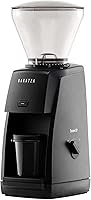
The Encore suits a beginner who wants clear controls for drip, pour over, and French press. It combines 40 settings with a hopper adjustment, on/off switch, and front pulse button.
Choose it if you prefer recording a numbered setting and making simple changes. Skip it if your main task is tuning unpressurized espresso, where finer adjustment control deserves priority.
Our complete home burr coffee grinder guide explains how to weigh grind range against your brewing routine.
Baratza Encore ESP: for espresso with filter coffee too
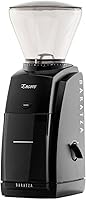
The Encore ESP suits someone who wants numbered espresso adjustments and also makes drip or pour over. Settings 1–20 use small espresso steps, while 21–40 use larger filter-brewing steps.
Its quick-release burr allows removal without taking the whole grinder apart, which helps with routine care. Skip it if you want continuous adjustment between steps, or if filter coffee is your only regular method.
The Encore vs Encore ESP comparison helps you decide whether the espresso range fits your needs.
Fellow Opus 2: for continuous adjustment and changing beans
The Opus 2 suits someone who wants to make tiny grind changes without fixed stops. It combines stepless adjustment with 48 mm conical burrs and a reference guide under the lid.
Fellow says its low-retention design minimizes grounds carried into the next brew. Anti-static technology, automatic shutoff, and tool-free burr access also suit a routine built around weighing individual doses and changing coffees.
Skip it if you prefer clicking back to a fixed numbered step. With continuous adjustment, careful notes about dial position become more useful.
For the basics behind these designs, read what a burr grinder is and how it works.
How should you set up and care for a grinder?
Start with correct assembly and a measured dose before judging any setting. Follow the grinder's instructions for installing the hopper, seating the burrs, and changing grind size.
Check whether the manufacturer calls for the motor to run when adjusting finer. Don't force an adjustment against trapped beans.
Weigh the grounds that reach your brewer, especially if you use a timer. The same grinding time can produce a different dose after you change beans or grind size.
After a large setting change, some grounds from the previous setting may remain inside. Follow the manufacturer's guidance for clearing them before judging the next brew.
Unplug the grinder before removing parts for cleaning. Brush away loose grounds and keep burrs and electrical parts dry unless the instructions expressly allow washing.
Our guide to how to clean a burr coffee grinder covers a basic care routine. If settings suddenly stop giving familiar results, check assembly and buildup before assuming you need a new grinder.
Which grind size mistakes waste the most coffee?
The biggest mistake is changing several variables at once. If you alter grind, dose, water, and steep time together, you won't know which change helped.
- Copying another grinder's number: Match the brew method first, then find your own setting.
- Chasing brew time alone: Use taste to decide whether a faster or slower brew needs correction.
- Making large espresso changes: Small movements can have a large effect on flow.
- Treating all bitterness as a grind problem: Roast flavor, temperature, and brew time also matter.
- Ignoring the finished dose: Grounds left inside the grinder can change how much coffee reaches the brewer.
Keep a short note with the bean, setting, dose, water amount, and result. Encore users can pair those notes with our Baratza Encore settings for every brew method.
Which coffee grind size and grinder should you choose?
Use this coffee grind size chart to pick your range, then choose equipment around your main brew method. Keep the setting that tastes balanced, even if it differs from a visual comparison or someone else's recipe.
Choose OXO for a repeated timed routine, Encore for straightforward filter brewing, Encore ESP for numbered espresso steps, or Opus 2 for continuous adjustment.
If espresso drives the decision, compare our best coffee grinders for espresso before choosing. Prioritize fine adjustment control over the total number of settings.
Frequently asked questions
What grind size should I use for coffee?
Start fine for espresso, medium for drip and pour over, and coarse for French press or cold brew. Follow your brewer's recipe when it gives a narrower range, then adjust in small steps while keeping the coffee dose, water amount, and other brewing steps the same.
Is a finer grind stronger?
A finer grind can increase extraction, but coffee strength also depends on the amount of coffee relative to water. If the flavor is balanced but too weak, use a little more coffee.
If it tastes sour and brews quickly, a finer grind may be the better change.
What grind size works for French press?
Coarse grounds are a useful starting point for French press, especially if you want less sediment through the mesh filter. A slightly finer grind can work with a suitable steep time, too.
Let particles settle before pouring, and stop before the thick layer of grounds reaches your cup.
Can one grinder make espresso and French press grounds?
Yes, a grinder can cover both methods, but reaching a fine setting and making small espresso adjustments are different needs. Choose fine-range steps or stepless adjustment if espresso matters most.
For mainly French press and filter coffee, simple controls and repeatable settings may matter more.