What Grind Size Is Best for Espresso?
The best grind size for espresso is fine, usually finer than table salt. Start in your grinder's espresso range, then adjust in small steps while keeping the coffee dose and finished shot weight steady.
On this page (7 sections)
- What grind size is best for espresso?
- How do you dial in espresso grind size?
- How do you tell whether espresso is too coarse or too fine?
- Which grinder features help you choose espresso grind size?
- What mistakes make espresso grind adjustments harder?
- How should you care for an espresso grinder?
- How do you choose the right espresso grind size and grinder?
The best grind size for espresso is fine, usually finer than table salt. Start in your grinder's espresso range, then use flow and taste to find the setting that works with your beans and basket.
Keep your coffee dose and finished shot weight steady while adjusting. Without those fixed points, a faster shot could come from less coffee in the basket rather than a grind that's too coarse.
What grind size is best for espresso?
Espresso needs a fine grind that gives water enough resistance without blocking its path through the coffee. The right setting produces a balanced shot at your chosen dose and yield, meaning the weight of espresso in the cup.
Texture gets you close, but it can't give you a final setting. Beans, baskets, and grinder calibration differ, so another person's grinder number may be wrong for your setup.
For a broader reference, use our coffee grind size chart. Espresso grounds are much finer than French press grounds and generally finer than those used for drip or pour-over.
What grind setting should you start with for espresso?
Start with the espresso setting recommended in your grinder's instructions, then adjust using your machine and coffee. Avoid copying a number from a different grinder model.
With a nonpressurized basket, the coffee bed supplies much of the resistance to water. Small grind changes matter because they can move a shot from fast and thin to slow and restricted.
A pressurized or dual-wall basket adds resistance at its outlet and is generally more forgiving of grind size. Follow its instructions rather than forcing it to use the same setting as a nonpressurized basket.
How do you dial in espresso grind size?
Dial in by fixing the recipe, then changing the grind alone. Use a scale for both the dry grounds and the finished drink, since volume changes with crema.
If your basket is designed for an 18 g dose, an example starting recipe is 18 g of coffee yielding 36 g of espresso. That 1:2 ratio is a starting point, not a requirement for every bean.
- Warm the machine and portafilter according to their instructions.
- Weigh a dose that fits your basket's recommended range.
- Grind, spread the grounds evenly, and tamp level.
- Start the shot and stop at your target beverage weight.
- Note the time, flow, and taste.
- Make one small grind change and repeat the same recipe.
Around 25–30 seconds is a common starting window for that example recipe, but taste should decide the result. Record whether you count from pump start or first drip so your notes stay useful.
Follow the grinder's instructions when moving finer, especially with beans between the burrs. After an adjustment, retained grounds can mix old and new settings, so a small purge may help if the manual recommends it.
How do you tell whether espresso is too coarse or too fine?
A fast shot suggests going finer, while a slow or stalled shot suggests going coarser. Check preparation before adjusting if the flow is uneven or changes sharply between otherwise identical shots.
When should you grind finer?
Move slightly finer when the shot reaches your target weight much faster than expected and tastes thin or sharply sour. Finer grounds usually slow the flow and help water extract more from the coffee.
Don't change the dose to slow the shot at the same time. That makes it harder to learn which adjustment helped.
When should you grind coarser?
Move slightly coarser when the shot barely drips or can't reach your target yield in a reasonable time. Check basket fill as well, since too much coffee can restrict flow.
Bitter flavor alone doesn't prove the grind is too fine. Darker roasting or a longer yield can also add bitterness, so consider the recipe once flow is sensible.
What if the shot is fast and sour despite a fine grind?
Check for channeling, where water finds easy paths through an uneven coffee bed. Grinding finer again may make the problem worse if part of the puck becomes too restrictive.
Break up clumps, spread the grounds evenly, and tamp level. A wet puck after brewing doesn't by itself tell you which grind change to make.
Which grinder features help you choose espresso grind size?
Prioritize small adjustments near your working espresso setting. Total setting count matters less than whether you can make a useful change between a shot that runs too fast and one that runs too slowly.
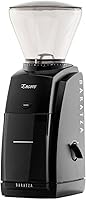
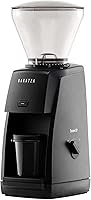
Baratza Encore ESP: for a first espresso setup
The Encore ESP suits beginners who want marked settings and a clear espresso range. It has micro-steps from 1 to 20 for espresso and broader steps from 21 to 40 for filter brewing.
Its hopper twist, front pulse button, and on/off switch keep the controls straightforward. The dosing cup helps transfer grounds to a portafilter, while the quick-release burr makes routine cleaning easier.
Choose it if you want a clear numbered reference for each bean. Skip it if you specifically want timed dosing or adjustment without fixed steps; our Baratza Encore ESP review covers its fit in more detail.
Breville Smart Grinder Pro: for direct portafilter dosing
The Smart Grinder Pro suits people who want to grind into the basket and save a grind duration. Its LCD shows the setting, time, and selected shots or cups.
It includes cradles for 50–54 mm and 58 mm portafilters, plus a grounds container. Grind time adjusts in 0.2-second increments, which helps refine a repeat routine.
Choose it for that portafilter workflow and visible controls. Skip it if stepless adjustment is your priority, and weigh the output after grind changes because a saved time doesn't guarantee the same coffee weight.
Baratza Encore ESP Pro: for fine adjustments between steps
The Encore ESP Pro suits someone who wants to adjust between fixed grind positions. Its stepless control lets you make smaller movements when one marked setting would be too coarse and the next too fine.
Single Dose Mode offers auto-stop, while Timer Mode adjusts in 0.1-second increments. Baratza's active anti-static technology is designed to reduce mess, and its tool-free burr removal helps with care.
Choose it if you want those dosing options and finer control. Skip it if you prefer simple numbered steps and don't need the extra modes; note your dial position when switching brew methods.
Baratza Virtuoso+: for filter coffee with occasional espresso
The Virtuoso+ suits a household that brews several methods and values timed grinding. Its 40 settings span espresso through French press, and its backlit bin helps you see the grounds.
Its timer runs up to 40 seconds and adjusts by tenths of a second. That controls grinding duration, but it doesn't make the grind steps smaller.
Choose it when mixed brewing is the main job. Skip it as the first choice for dialing in a nonpressurized espresso basket, where the ESP's dedicated fine steps or the Pro's stepless control are more relevant.
For other choices, see the best coffee grinders for espresso. Check the exact electrical version before ordering, especially for the Virtuoso+, whose supplied specifications identify a 230-volt version.
What mistakes make espresso grind adjustments harder?
The biggest mistake is changing several variables at once. Keep the same beans, dose, yield, and preparation until you understand what one grind change does.
Avoid these other common traps:
- Chasing a time alone: a balanced shot doesn't need changing just to match someone else's stopwatch.
- Using tamping force as a flow control: aim for a level, repeatable tamp and adjust the grind instead.
- Filling the basket by sight: weigh the dose and stay within the basket's intended range.
- Expecting a saved setting to last forever: beans change as they age, so small corrections are normal.
- Confusing timer precision with grind precision: a timer controls duration; burr adjustment controls particle size.
If you already have a standard Encore, read whether the Baratza Encore can grind fine enough for espresso before replacing it. Your basket type and need for small adjustments should guide that decision.
How should you care for an espresso grinder?
Keep the burrs and grounds path clear of buildup so old coffee doesn't collect between uses. Unplug the grinder before cleaning and follow its instructions for removing parts.
Use the approved brush or dry cleaning method for the burr chamber. Don't immerse the grinder or wash burrs unless the manufacturer specifically allows it.
After removing a burr, seat it correctly before returning to your saved setting. Our burr grinder cleaning guide explains the routine in more detail.
How do you choose the right espresso grind size and grinder?
Choose what grind size for espresso works by holding the recipe steady and following flow and taste. Once the shot flows sensibly, refine it for the flavor you want instead of chasing a texture comparison.
Pick the Encore ESP for marked espresso adjustments, the ESP Pro for stepless control, or the Smart Grinder Pro for timed grinding into a portafilter. Choose the Virtuoso+ when mixed brewing matters more than fine espresso control.
Start with your basket and daily routine, then choose the controls that support them. The burr coffee grinder buying guide will help you compare those needs across home brewing methods.
Frequently asked questions
What grind size should I use for espresso?
Use a fine grind, usually finer than table salt, as your starting point. Adjust with your own beans and basket: go finer if the shot flows too quickly, or coarser if it barely drips.
Keep the dose and finished shot weight steady so you can judge each change.
Is espresso grind finer than drip coffee?
Yes, espresso generally needs a finer grind than drip coffee. Its compact coffee bed must provide enough resistance to water under pressure, while drip grounds need to let gravity-fed water pass through.
Texture comparisons are rough guides, so finish dialing in with a recipe and taste.
Can espresso grounds be too fine?
Yes, grounds can be fine enough to restrict flow or stall a shot. Move slightly coarser if espresso barely drips, and check that the basket isn't overfilled.
Uneven preparation can also cause problems, so don't assume a bitter or sour taste alone proves the grind is wrong.
Can a regular burr grinder grind fine enough for espresso?
Some can, but reaching a fine texture doesn't guarantee enough control for espresso. A nonpressurized basket benefits from small adjustments between settings, while a pressurized basket is generally more forgiving.
Choose for your basket and brewing habits, rather than assuming every grinder with an espresso setting will suit you.