6 Best Coffee Grinders for Espresso (October 2026)
The best coffee grinders for espresso include the Baratza Encore ESP for first espresso setups, the Baratza Virtuoso+ for mixed brewing households, and the Breville Smart Grinder Pro for busy morning routines.
On this page (9 sections)
- Which coffee grinder is best for espresso?
- How MerryKettle compared these espresso grinders
- Espresso grinder comparison
- Best coffee grinders for espresso: who should buy each pick?
- How do you choose an espresso grinder for your basket?
- How do you set up a new espresso grinder?
- How should you clean and care for an espresso grinder?
- Which mistakes make espresso grinding harder?
- Which espresso grinder should you choose for your routine?
The Baratza Encore ESP is the best coffee grinder for espresso for most home brewers because it pairs dedicated fine adjustments with simple controls. Choose the Breville Smart Grinder Pro for timed portafilter dosing or the MiiCoffee DF54 if you want to weigh beans for each shot.
Start with your espresso basket and daily routine before comparing burr sizes or setting counts. A grinder needs to let you control the shot, and its dosing method should fit how you actually make coffee.
For the basics, start with our guide to espresso grind size. Our burr grinder buying guide explains the broader choices if you're replacing a blade grinder.
Our picks at a glance
-
1
-
2

-
3

- 4
 Best for fine shot adjustmentsCheck it
- 5
 Check it
Shardor Conical Burr Espresso Grinder
Best for touchscreen users - 6
 Best for frequent bean changesCheck it
Which coffee grinder is best for espresso?
The Encore ESP is the strongest starting point here for a first home espresso setup. Its espresso-focused adjustment range gives you clear reference points while leaving room for filter coffee.
Choose by your main task rather than treating every feature as an upgrade. A portafilter cradle helps with direct dosing, while stepless adjustment helps you refine a shot between preset grind positions.
A pressurized basket is more forgiving of grind variation because the basket itself helps create resistance. With a non-pressurized basket, the coffee bed does more of that work, so small grind changes become more useful.
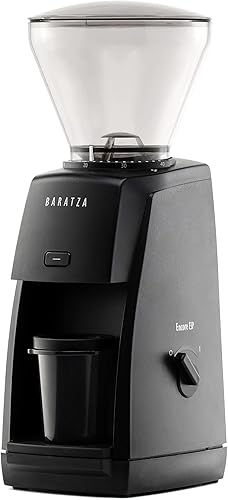
Baratza Encore ESP: Best for first espresso setups
- Dedicated espresso adjustment range
- Separate filter coffee range
- 40 mm hardened alloy steel burrs
- Tool-free quick-release burr
Dedicated fine steps make the Encore ESP a clear starting point for home espresso, with a separate range for filter coffee. Simple controls suit readers who prefer weighing their dose over programming a timer.
Pros
- Fine steps reserved for espresso
- Tool-free burr removal
- Dosing cup and grounds bin options
Cons
- Cannot adjust between fixed steps
- No programmable dosing timer
Baratza Virtuoso+: Best for mixed brewing households
- 40 grind settings
- Digital timer with 0.1-second adjustment
- LED backlit grounds bin
- 230 g capacity
The timer and illuminated grounds bin suit a household making several kinds of coffee. Choose it for a shared brewing routine rather than for dedicated espresso micro-adjustment.
Pros
- Fine control over grinding duration
- Illuminated grounds bin
- Range covers espresso and filter methods
Cons
- No dedicated espresso micro-step range
- This version specifies 230 V power
Breville Smart Grinder Pro: Best for busy morning routines
- 60 grind settings
- Programmable timer in 0.2-second steps
- Direct portafilter grinding
- LCD with grind setting and time
Programmable grinding time and included portafilter cradles suit a repeatable morning routine. The display keeps the selected setting, duration and shots or cups in view.
Pros
- Direct portafilter or container dosing
- Small and large portafilter cradles included
- Visible settings and programmable time
Cons
- Largest counter footprint in this group
- Timer does not measure dose weight
Baratza Encore ESP Pro: Best for fine shot adjustments
- Stepless grind adjustment
- Single Dose Mode with auto-stop
- Timer Mode with 0.1-second control
- Active anti-static technology
Continuous adjustment suits espresso drinkers who want to move between fixed grind positions. Its single-dose and timed modes let you choose how much measuring to do before grinding.
Pros
- Continuous grind adjustment
- Two hands-free grinding modes
- Tool-free quick-release burr
Cons
- Returning to a setting needs careful tracking
- Timer Mode still needs dose-weight checks
Shardor Conical Burr Espresso Grinder: Best for touchscreen users
- 51 grind settings
- Timer with 0.1-second adjustment
- Portafilter cradle and dosing ring
- Anti-static technology
Touchscreen controls, a dosing ring and a portafilter cradle suit readers who want several ways to collect grounds. Portafilter fit should guide which accessory you use.
Pros
- Direct portafilter grinding
- Dosing ring and residual grounds cleaner included
- Fine adjustment of grinding duration
Cons
- Cannot adjust between fixed grind positions
- Some portafilters need the dosing ring instead of the cradle
MiiCoffee DF54: Best for frequent bean changes
- 54 mm stainless steel flat burrs
- Stepless adjustment
- Single-dose design with bellows
- Plasma generator to reduce static
The DF54 suits readers who weigh beans for each shot and switch coffees often. Allow for transferring grounds from its dosing cup and brushing the exit chute weekly.
Pros
- Continuous espresso adjustment
- Single-dose workflow
- Included dosing cup and bellows
Cons
- Requires measuring beans for each dose
- Exit chute needs weekly brushing
How MerryKettle compared these espresso grinders
We compared espresso adjustment, dosing controls, grounds handling and care needs to match each grinder with a home brewing routine. The scores reflect that overall fit; a lower-ranked specialist can still be the right choice for your setup.
Total setting count received less weight than the kind of adjustment available near espresso fineness. A timer's small increments also describe control over duration, not proof that every dose will weigh the same.
We kept workflow trade-offs visible. Measuring beans, transferring grounds, recording settings and cleaning a chute all affect how pleasant a grinder is to use each morning.
Espresso grinder comparison
Compare adjustment and dosing together: one controls the grind, while the other controls how you deliver coffee to the basket. Neither replaces checking the weight of your dose.
The table separates those jobs so you can see which controls match your routine. Burr size alone doesn't settle the choice.
| Product | Best for | Adjustment | Dosing | Burrs | Our score |
|---|---|---|---|---|---|
| Baratza Encore ESP | first espresso setups | Micro-steps 1–20; macro-steps 21–40 | Manual pulse or on/off control | 40 mm hardened alloy steel conical burrs | 8.6 |
| Baratza Virtuoso+ | mixed brewing households | 40 fixed settings | 40-second timer, adjustable to 0.1 second | M2 conical steel burrs | 8.2 |
| Breville Smart Grinder Pro | busy morning routines | 60 fixed settings | Programmable timer in 0.2-second increments | Conical burrs | 8.1 |
| Baratza Encore ESP Pro | fine shot adjustments | Stepless | Single Dose Mode or Timer Mode | M2 precision steel burrs | 7.8 |
| Shardor Conical Burr Espresso Grinder | touchscreen users | 51 fixed settings | Timer up to 60 seconds; 1–12 cup selection | 40 mm stainless steel conical burrs | 7.4 |
| MiiCoffee DF54 | frequent bean changes | Stepless | Single dose with included 58 mm cup | 54 mm stainless steel flat burrs | 7.3 |
Best coffee grinders for espresso: who should buy each pick?
Choose the Encore ESP for a straightforward start, then consider the other picks when a specific workflow matters more. The differences below explain who benefits from each design and who should skip it.
Baratza Encore ESP: Best for first espresso setups
- Dedicated espresso adjustment range
- Separate filter coffee range
- 40 mm hardened alloy steel burrs
- Tool-free quick-release burr
Dedicated fine steps make the Encore ESP a clear starting point for home espresso, with a separate range for filter coffee. Simple controls suit readers who prefer weighing their dose over programming a timer.
Pros
- Fine steps reserved for espresso
- Tool-free burr removal
- Dosing cup and grounds bin options
Cons
- Cannot adjust between fixed steps
- No programmable dosing timer
The Encore ESP suits someone learning to dial in espresso who wants clearly numbered adjustments. Its micro-steps 1–20 cover espresso, while the larger steps from 21–40 cover filter brewing.
That split matters more than the total count. It reserves smaller changes for the part of the range where a shift in grind size can noticeably change shot flow.
Twist the hopper to select a setting, then use the front pulse button or on/off switch to grind. The dosing cup supports transfer to a portafilter, while the grounds bin suits larger batches.
The quick-release burr comes out without extra tools or taking the whole grinder apart. That makes access for routine care a useful part of the design.
Buy it if you want simple controls and are comfortable checking your dose with a scale. Skip it if a programmable timer is central to your routine or you specifically want continuous adjustment between settings.
Use a notebook to record the coffee, dose and successful grind position. Our Baratza Encore ESP review covers its fit in more detail.
Baratza Virtuoso+: Best for mixed brewing households
- 40 grind settings
- Digital timer with 0.1-second adjustment
- LED backlit grounds bin
- 230 g capacity
The timer and illuminated grounds bin suit a household making several kinds of coffee. Choose it for a shared brewing routine rather than for dedicated espresso micro-adjustment.
Pros
- Fine control over grinding duration
- Illuminated grounds bin
- Range covers espresso and filter methods
Cons
- No dedicated espresso micro-step range
- This version specifies 230 V power
The Virtuoso+ suits a household where espresso shares the counter with pour-over, French press or an automatic brewer. Its 40 settings cover those methods, and its timer supports a repeated grinding duration.
The digital timer runs up to 40 seconds and adjusts in tenths of a second. The illuminated grounds bin helps you see the coffee collecting, but weighing it remains the way to check the dose.
A 230 g capacity suits readers who want fewer refills than the smaller Encore models provide. The sculpted metal top and base also give it a distinct look if the grinder stays on display.
Buy it if timed grinding into a bin and broad brewing use are your priorities. Skip it for an espresso-only setup where dedicated fine adjustment matters more than batch convenience.
Check power compatibility carefully: this version specifies 230 V. A plug adapter alone doesn't change supply voltage.
For a household deciding between Baratza's broader brewing options, our Encore vs Virtuoso+ comparison is the useful next read. Keep separate notes for each brew method so switching doesn't mean starting over.
Breville Smart Grinder Pro: Best for busy morning routines
- 60 grind settings
- Programmable timer in 0.2-second steps
- Direct portafilter grinding
- LCD with grind setting and time
Programmable grinding time and included portafilter cradles suit a repeatable morning routine. The display keeps the selected setting, duration and shots or cups in view.
Pros
- Direct portafilter or container dosing
- Small and large portafilter cradles included
- Visible settings and programmable time
Cons
- Largest counter footprint in this group
- Timer does not measure dose weight
The Smart Grinder Pro suits someone who wants to program grinding time and collect grounds directly in a portafilter. Its LCD shows the selected setting, time and shots or cups, keeping the main controls visible.
The 60-position range covers espresso through French press. Grinding time adjusts in 0.2-second increments, so you can change duration separately from grind size.
Included cradles cover 50–54 mm and 58 mm portafilters. You can also grind into a container or filter basket, which helps when the same grinder serves several brewers.
Its 18 oz hopper favors keeping beans ready for repeated use. At 6.28 x 8.46 x 15.33 in, it has the largest counter footprint in this group, so allow room beside the espresso machine.
Buy it if timed direct dosing suits your mornings. Skip it if you prefer a compact setup built around weighing a fresh portion of beans for every shot.
After changing beans or grind size, recheck the timer against dose weight. If you're still deciding how much espresso-specific adjustment you need, our Encore vs Encore ESP guide explains that distinction.
Baratza Encore ESP Pro: Best for fine shot adjustments
- Stepless grind adjustment
- Single Dose Mode with auto-stop
- Timer Mode with 0.1-second control
- Active anti-static technology
Continuous adjustment suits espresso drinkers who want to move between fixed grind positions. Its single-dose and timed modes let you choose how much measuring to do before grinding.
Pros
- Continuous grind adjustment
- Two hands-free grinding modes
- Tool-free quick-release burr
Cons
- Returning to a setting needs careful tracking
- Timer Mode still needs dose-weight checks
The Encore ESP Pro suits someone who wants to refine espresso without stopping at fixed grind positions. Its stepless adjustment lets you make a smaller change when a shot is close to where you want it.
Its 2 grinding modes support different routines. Single Dose Mode stops automatically, while Timer Mode gives you control in 0.1-second increments.
Choose the first when you measure beans before grinding. Choose the second when you'd rather establish a grinding duration and check the resulting dose.
Baratza's active anti-static system is designed to reduce grounds mess. A removable flow control disk manages bean flow toward the burrs, and the quick-release system allows tool-free burr removal for care.
Buy it if continuous adjustment and the choice of timed or single-dose operation address a clear need. Skip it if you prefer distinct clicks that are easy to count when moving between brew methods.
Record the dial position carefully before making a large change. Stepless control gives you more freedom within the range, but returning to an earlier espresso setting needs a more exact reference than counting clicks.
Shardor Conical Burr Espresso Grinder: Best for touchscreen users
- 51 grind settings
- Timer with 0.1-second adjustment
- Portafilter cradle and dosing ring
- Anti-static technology
Touchscreen controls, a dosing ring and a portafilter cradle suit readers who want several ways to collect grounds. Portafilter fit should guide which accessory you use.
Pros
- Direct portafilter grinding
- Dosing ring and residual grounds cleaner included
- Fine adjustment of grinding duration
Cons
- Cannot adjust between fixed grind positions
- Some portafilters need the dosing ring instead of the cradle
The Shardor suits someone who prefers touchscreen controls and wants accessories for collecting grounds at the portafilter. Its cradle and dosing ring offer different ways to manage that transfer.
There are 51 grind positions and a timer adjustable in 0.1-second increments up to 60 seconds. The cup selector offers another control, but espresso dosing is better checked by weight than by a cup label.
Installing the cradle activates espresso mode, and the portafilter activation switch starts grinding. If your portafilter doesn't fit the cradle, use the dosing ring to help contain grounds.
Shardor's anti-static technology is designed to reduce mess, and a residual grounds cleaner is included. Keep the collection area clear rather than relying on that feature to handle every stray ground.
Buy it if you want a touchscreen and direct dosing options. Skip it if continuous grind adjustment is your main requirement.
Settle on the collection method that fits your portafilter before programming a routine. A secure, easy transfer is more useful than repeatedly forcing an awkward portafilter into a cradle.
MiiCoffee DF54: Best for frequent bean changes
- 54 mm stainless steel flat burrs
- Stepless adjustment
- Single-dose design with bellows
- Plasma generator to reduce static
The DF54 suits readers who weigh beans for each shot and switch coffees often. Allow for transferring grounds from its dosing cup and brushing the exit chute weekly.
Pros
- Continuous espresso adjustment
- Single-dose workflow
- Included dosing cup and bellows
Cons
- Requires measuring beans for each dose
- Exit chute needs weekly brushing
The DF54 suits someone who changes coffees often and wants to measure each portion before grinding. Its single-dose design and stepless adjustment fit a routine built around individual shots rather than a stocked hopper.
It uses 54 mm stainless steel flat burrs and includes a transparent dosing cup. MiiCoffee recommends the cup over the portafilter rest, especially when your portafilter isn't 58 mm.
The bellows help clear grounds from internal spaces. Still, check output weight when you establish a recipe rather than assuming all the beans you put in will reach the basket.
MiiCoffee's plasma generator is designed to reduce static around the exit chute. The brand calls for weekly chute brushing to help maintain that system and prevent clogging.
Buy it if weighing beans and transferring grounds are welcome parts of your routine. Skip it if you want to keep beans loaded and press a timed dose each morning.
Its flat burrs are a design choice, not a promise of a particular flavor in every coffee. Our single-dose grinder guide explains the workflow before you commit to it.
How do you choose an espresso grinder for your basket?
Choose fine control for a non-pressurized basket and a convenient routine for the number of drinks you make. Your basket type is a more useful starting point than the biggest burr or longest feature list.
What makes the best espresso grinder for beginners?
Clear adjustments and repeatable dosing make an espresso grinder easier to learn. You should be able to change one thing, observe the result and return to an earlier setting without guessing.
For a non-pressurized basket, prioritize small changes near espresso fineness. With a pressurized basket, you have more room to favor controls that also suit your other coffee makers.
Don't choose only by how fine a grinder can go. Espresso needs a usable range around the right setting, because beans and brewing recipes don't all need the same grind.
Stepped or stepless adjustment?
Choose stepped adjustment if clear reference points matter most; choose stepless adjustment if you want freedom between those points. Neither design removes the need to dial in each coffee.
A fixed step can occasionally move a shot from too fast to too slow. Continuous adjustment gives you more room between those outcomes, but a dedicated fine-step range can also provide useful control.
If you switch to filter coffee daily, write down both positions. Returning to the same mark gives you a starting point, then a fresh shot tells you whether a small correction is needed.
Timed dosing or single dosing?
Choose timed dosing for repeated use of one coffee and single dosing for frequent bean changes or premeasured portions. Both routines benefit from a scale.
A timer repeats duration. Different beans, grind settings and hopper conditions can change how much coffee passes through during that time.
Single dosing begins with weighing beans, but the coffee reaching the basket can differ from the input. Measure both while setting up so you understand your routine.
How much space should you allow?
Allow room for loading, collecting grounds and cleaning, not just the grinder's base. Check clearance above a hopper and space to lift out a bin or dosing cup.
Think about the route from grinder to espresso machine, too. A short, clear transfer area helps more than squeezing the grinder into a corner where grounds spill whenever you move the portafilter.
How do you set up a new espresso grinder?
Start with a fixed dose and target drink weight, then adjust grind size to control the shot. Changing several variables together makes it harder to know which change helped.
Establish a starting recipe
Use your basket or espresso machine guidance to choose a suitable dose. Don't copy a dose that overfills your basket just because it appears in another person's recipe.
A brew ratio describes ground coffee compared with espresso in the cup. For example, 18 g of grounds and 36 g of espresso form a 1:2 ratio, which is a useful starting point rather than a rule for every coffee.
Weigh the empty portafilter, add coffee, then confirm the dose. Distribute the grounds evenly and tamp level before brewing.
Adjust grind before changing everything else
Use the manual's suggested espresso starting position rather than assuming the same number works across grinders. Keep dose and target drink weight steady as you adjust.
If the shot reaches the target weight too quickly and tastes thin or sharply sour, try a slightly finer grind. If it struggles to flow and tastes harsh, try a slightly coarser grind.
Uneven puck preparation can also cause poor flow, so check distribution and tamping before making a large adjustment. Shot time is a clue to record alongside taste, not a result you must force every coffee to match.
Set the timer after the grind is close
Dial in grind size first, then set the timer to deliver your chosen dose. A large grind change can alter output, so programming time too early creates extra work.
For single dosing, compare bean input with ground output over several doses. Follow the manual for clearing grounds and making adjustments while beans are in the burrs.
How should you clean and care for an espresso grinder?
Keep the grounds path clear and the burr area dry, following the model's manual for access and cleaning. Regular care removes trapped grounds and coffee oils that can affect flavor or block the chute.
Clear loose grounds before they build up
Brush accessible collection areas and wipe the surrounding counter regularly. Unplug the grinder before cleaning, and never put fingers or tools into moving burrs.
Don't rinse burrs, the motor housing or internal spaces unless the manual specifically allows it. Removable containers may have different care instructions, and washed parts must be fully dry before reassembly.
Follow the model's removal procedure
A quick-release burr makes access easier, but each grinder still has a correct removal and reassembly process. Record your setting before opening the grinder and check calibration instructions before resuming use.
For the DF54, keep the chute brush routine on the calendar. Anti-static features reduce one source of mess; they don't remove the need to clear coffee from the grounds path.
If grinding slows sharply or the sound changes, stop and inspect according to the manual. Running longer is a poor substitute for finding a blockage.
Which mistakes make espresso grinding harder?
The most common mistakes are changing too many variables, trusting time as weight and ignoring puck preparation. Avoiding those habits can make an existing grinder easier to dial in.
Chasing the smallest grind setting
The finest setting isn't automatically the right espresso setting. Coffee packed too tightly can restrict flow, so start within the recommended range and work toward a balanced shot.
Don't force the adjustment dial or search for burr contact as a shortcut. Follow the manual's limits and adjustment procedure.
Using one timer setting for every coffee
A saved timer is a starting point when you change beans, not a fixed dose guarantee. Weigh the next few portions and revise the duration if needed.
Keep the dose steady while adjusting grind. Otherwise, a change in resistance might come from extra coffee rather than the new setting.
Blaming the grinder for uneven preparation
An uneven bed of grounds or tilted tamp can give water an easier route through the puck. That can produce a fast shot even when the grind seems fine enough.
Spread grounds evenly, tamp level and repeat the same preparation before judging the next adjustment. Freshly ground coffee deserves the same care on its way into the basket.
Which espresso grinder should you choose for your routine?
The best coffee grinder for espresso is the one whose adjustments and dosing you can repeat. Make the final choice around the task you perform most often.
- Choose the Encore ESP for a first espresso setup with simple controls and occasional filter brewing.
- Choose the Virtuoso+ for a mixed brewing household that favors timed grinding into a bin, after confirming power compatibility.
- Choose the Smart Grinder Pro for programmed grinding into a portafilter and visible controls.
- Choose the Encore ESP Pro for continuous adjustment with a choice of single-dose or timed operation.
- Choose the Shardor for touchscreen controls and portafilter collection accessories.
- Choose the DF54 if you change beans often and welcome a measured, single-dose routine.
Before ordering, decide whether you'd rather weigh beans before grinding or check grounds after a timed dose. That choice narrows the field quickly; our best budget espresso grinders guide helps if budget is the remaining deciding factor.
Our top 3 picks at a glance
-
1
-
2
-
3
Frequently asked questions
What kind of grinder is best for espresso?
A burr grinder with small, useful adjustments is best for espresso, especially with a non-pressurized basket. You need control over water flow through the coffee, not just a fine-looking grind.
Choose dedicated fine steps for clear reference points or stepless adjustment if you want to move between preset positions.
Can one grinder handle espresso and other coffee?
Yes, one grinder can handle espresso and other brewing methods if its range covers both. Record separate settings for each coffee and brew method, then check the dose when you switch.
Some grounds can remain inside a grinder, so the first dose after a large adjustment may contain coffee from the previous setting.
Is stepless adjustment better for espresso?
Stepless adjustment is useful when neighboring fixed settings make your shot run too fast or too slowly. It gives you room to adjust between those positions.
It isn't essential for every setup, though.
Dedicated espresso steps can provide enough control while making it easier to record and revisit a numbered setting.
How often should you clean an espresso grinder?
Follow the manual's cleaning schedule and clear loose grounds regularly. MiiCoffee calls for brushing the DF54 exit chute weekly to help prevent clogging and maintain ionizer performance.
Unplug the grinder before cleaning, and follow our guide to cleaning a burr grinder alongside the model's instructions before removing parts.
Can the Baratza Encore grind fine enough for espresso?
Don't treat the standard Encore and Encore ESP as the same espresso grinder. The ESP has a dedicated fine-adjustment range that distinguishes it from the standard model.
Your basket type also affects what you need.
Read our Baratza Encore espresso guide before choosing between the two for an espresso machine.