Baratza Encore ESP Coffee Grinder Review: Worth It? (October 2026)
The Baratza Encore ESP suits home brewers making espresso and filter coffee. Choose it for finer espresso adjustment with numbered steps; consider a stepless grinder if you want changes between those positions.
On this page (8 sections)
- The Baratza Encore ESP at a glance
- How does the Encore ESP's grind adjustment work?
- How should you set up the Encore ESP for espresso?
- Can you switch between espresso and filter coffee every day?
- How does the Encore ESP compare with the alternatives?
- How do you care for the Encore ESP?
- Which mistakes make espresso harder to dial in?
- Which grinder should you choose for your kitchen?
The Baratza Encore ESP is a good fit for home brewers who make both espresso and filter coffee. Its main advantage is finer adjustment within the espresso range, giving you more useful control than a general-purpose setting range.
Choose it if you like numbered positions and can spend a few shots finding the right grind. If you mainly brew drip coffee, or want continuous adjustment for espresso, one of the alternatives below may suit your routine better.
The Baratza Encore ESP at a glance
The Encore ESP puts espresso adjustment first without dropping filter brewing. It pairs 40 mm hardened alloy steel burrs with simple controls and separate ways to collect espresso doses or larger batches.
Baratza Encore ESP: Best for mixed brew households
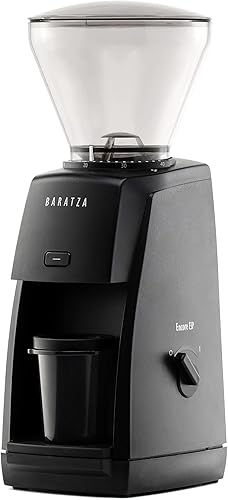
- 40 mm conical steel burrs
- 40 settings in 2 ranges
- 120 g capacity
- Quick-release burr
Choose the Encore ESP if espresso and filter coffee share your counter. Its separate adjustment ranges give espresso finer steps, while a quick-release burr simplifies access for care.
Pros
- Dedicated espresso adjustment range
- Tool-free quick-release burr
- Front pulse button and on/off switch
- Grounds bin and espresso dosing cup
Cons
- Cannot adjust between fixed positions
- Switching brew methods requires finding each recipe's setting again
Its dimensions are 5.91 x 5.12 x 13.39 in, so measure both the counter space and the clearance above it. Leave room to reach the hopper and remove parts for care.
The useful question is how often you'll make espresso. A dedicated fine range matters much more for a portafilter basket than for a daily pot of drip coffee.
Where the Baratza Encore ESP fits best
The ESP suits someone building a home espresso routine who also wants pour-over, drip or French press. Numbered positions give you a reference to record beside each recipe.
It also makes sense if you prefer a direct routine: select a grind, collect the coffee and brew. You still need to control the amount of coffee yourself rather than assuming a grind setting determines the dose.
Who should skip it?
Skip the ESP if filter coffee is your only regular brew method and you have no plans for espresso. The standard Encore gives that buyer a simpler choice without making the espresso range the reason to buy.
Choose a stepless alternative if tiny adjustments between fixed positions are a priority. A stepped grinder can leave you deciding between two nearby settings rather than choosing a point between them.
How does the Encore ESP's grind adjustment work?
The ESP uses micro-steps from 1 to 20 for espresso and macro-steps from 21 to 40 for filter brewing. Twist the hopper to choose the setting, then use the front pulse button or on/off switch to grind.
The two ranges solve different problems. Espresso needs small changes because a slight shift in grind can change how easily water passes through a tightly packed basket.
Filter brewing usually benefits from a wider spread of grind sizes. Its useful starting point also depends on the brewer, filter, batch size and pouring method.
A number is a reference, not a recipe that works for every bag. Keep notes for each coffee, including the dose, grind position and brewing result.
Our guide to Baratza Encore espresso capability explains why grinding fine enough and having useful adjustment steps are separate concerns. For the wider buying picture, see our burr coffee grinder buying guide.
How should you set up the Encore ESP for espresso?
Start with a steady dose and a clear beverage-yield target, then adjust the grind. Changing the coffee amount, grind and shot yield together makes it hard to tell which change helped.
Read Baratza's setup directions before the first use, including how to fit the hopper and burr parts. Use the recommended espresso starting position as a baseline rather than copying another brewer's number.
Build a repeatable first recipe
Use a scale to weigh the beans and the espresso in the cup. Follow your basket or machine's recipe guidance for the dose so you don't overfill the basket.
Record the dose, beverage yield and shot time. Taste the result before deciding what to change, since time alone doesn't tell you whether a shot tastes balanced.
For general starting guidance, our article on what grind size works best for espresso explains how grind affects flow.
Make one useful change at a time
If espresso runs through quickly and tastes thin or sharp, try a small move finer. If it barely flows and tastes harsh, try a small move coarser.
Uneven puck preparation can cause fast channels even with a fine grind. Distribute the grounds evenly and tamp level before blaming the grinder.
Follow Baratza's instructions when changing settings with beans inside, especially when moving finer. Avoid forcing the adjustment against resistance.
Use the espresso dosing cup to collect grounds before transferring them into the basket. Check the fit first and transfer over a tray until you've found a tidy motion.
Can you switch between espresso and filter coffee every day?
Yes, the Encore ESP can serve a household that brews both ways, but switching methods adds a little work. Record separate starting positions and expect a small adjustment when returning to espresso.
Coffee left inside a grinder can mix with the next dose. After a large setting change, check that the grounds suit the new brew method before committing a full batch.
If weighing individual doses appeals to you, our guide to single-dose coffee grinding explains the routine. Weighing beans before grinding also makes it easier to track how much coffee reaches your brewer.
Use the grounds bin for batch brewing rather than filling the espresso cup repeatedly. Keep a separate filter recipe so an espresso adjustment doesn't become your new drip starting point.
A shared grinder works best when everyone records changes. A short note beside the machine can prevent the next person from brewing espresso with yesterday's French press position.
How does the Encore ESP compare with the alternatives?
Choose by your main brew method and preferred workflow. The Encore favors straightforward filter brewing, the Virtuoso+ adds repeatable timed grinding, and the Opus 2 offers continuous adjustment.
| Grinder | Adjustment | Workflow feature | Buyer fit |
|---|---|---|---|
| Baratza Encore ESP | Separate espresso and filter ranges | Grounds bin and espresso dosing cup | Regular espresso plus filter coffee |
| Baratza Encore | General 40-setting range | Pulse button and on/off switch | Filter-focused beginners |
| Baratza Virtuoso+ | Fixed settings | Digital timer and backlit bin | Repeat batch-brewing routines |
| Fellow Opus 2 | Stepless | Automatic shutoff and magnetic cups | Brewers who want smaller grind changes |
Baratza Encore: choose it for a filter-first routine
The standard Encore makes sense if your mornings revolve around drip, pour-over or French press. Its simple controls let you concentrate on the recipe without making espresso adjustment the center of the decision.
It occupies the same space as the ESP, so choosing the original doesn't save counter room. The reason to choose it is your brewing needs, not a smaller footprint.
Skip it if you're buying mainly to dial in espresso in a non-pressurized basket. The Encore vs Encore ESP comparison covers that choice, while our Baratza Encore review looks more closely at the original.
Baratza Virtuoso+: choose it for repeated batches
The Virtuoso+ suits someone who makes a similar batch each morning and wants to reuse a grind time. Its timer runs up to 40 seconds in tenth-second increments, and the illuminated bin helps you see the grounds.
A timer repeats duration, not weight. Check the output with a scale when you change beans or grind size, since the same run time can produce a different amount.
Skip it if you already weigh every bean dose and don't want timed grinding. Its metal top and base may appeal visually, but those details aren't a substitute for the ESP's dedicated espresso range.
Fellow Opus 2: choose it for continuous adjustment
The Opus 2 suits an espresso brewer who wants to choose positions between fixed steps. That freedom helps when one grind position flows too quickly and the next flows too slowly.
It has 48 mm conical burrs, anti-static technology and 2 magnetic catch cups. The espresso cup fits 54 mm and 58 mm portafilters, so check compatibility if yours is another size.
Fellow says the grinder minimizes retained coffee; that doesn't remove the value of checking your ground dose. Its automatic shutoff is useful if you prefer starting the grind and moving to another preparation task.
Skip it if clear fixed positions matter more than small adjustments. Our Encore and Fellow Opus 2 comparison gives more context for that choice.
How do you care for the Encore ESP?
Keep the burr area and grounds path free of built-up coffee, using Baratza's instructions for removal and reassembly. The ESP's quick-release burr provides access without extra tools or dismantling the whole grinder.
Unplug it before opening the burr area. Brush out loose grounds and keep water away from the motor and burr assembly.
Clean the grounds bin and dosing cup as directed, then let any washed parts dry fully before reinstalling them. Damp coffee residue can stick inside parts and make the next cleanup harder.
Check the burr seating after reassembly rather than forcing the hopper into place. If a familiar recipe suddenly behaves differently after cleaning, confirm that everything is fitted correctly before making large grind changes.
Our guide to cleaning a Baratza Encore covers care for the grinder family. Use the ESP's own removal steps, available through Baratza's support resources.
Set your cleaning routine around use rather than waiting for a blockage. More frequent grinding and visible oily buildup call for closer attention to the grounds path.
Which mistakes make espresso harder to dial in?
The biggest mistake is changing several parts of the recipe at once. Keep the dose and beverage yield steady while adjusting grind, then make further recipe changes once the flow is under control.
Avoid these other common errors:
- Treating someone else's number as a target. Different beans, baskets and machines can need different positions.
- Changing grind before checking puck preparation. Uneven distribution can create channels that resemble a grind problem.
- Chasing shot time alone. Use flow and time as clues, then judge the coffee by taste.
- Ignoring the coffee's age. A familiar bag can need adjustment as it ages, even when the machine and dose stay the same.
- Assuming a timer measures a dose. Weigh the output when consistency matters.
- Switching methods without recording the setting. Keep separate notes for espresso and filter recipes.
Don't expect a finer setting to solve every sour shot. Water temperature, beverage yield and uneven extraction can also affect taste, so check the whole recipe when grind changes stop helping.
Which grinder should you choose for your kitchen?
Choose the Baratza Encore ESP for regular espresso plus filter brewing, especially if numbered steps appeal to you. Choose the Encore for a filter-first routine, the Virtuoso+ for repeated timed batches, or the Opus 2 for continuous adjustment.
Before ordering, measure access above the hopper and think through how you'll weigh, collect and transfer each dose. Those daily steps matter more than a feature you'll rarely use.
If espresso is the main goal, decide first whether fixed steps give you enough control. Our espresso grinder guide helps narrow that choice across other options.
Frequently asked questions
Can the Baratza Encore ESP grind for espresso?
Yes, the Baratza Encore ESP has a dedicated fine-adjustment range for espresso. Start with Baratza's guidance, keep your dose and beverage yield steady, and change the grind gradually.
The right setting depends on your beans, basket and recipe, so a number that works for one coffee may need changing for another.
What is the difference between the Encore and Encore ESP?
The Encore ESP gives espresso finer adjustment steps within a separate range, while the Encore has a general 40-setting range. Both use hopper adjustment and simple start controls.
Choose the ESP for regular espresso brewing; choose the Encore when drip, pour-over or French press is your main use.
Does the Baratza Encore ESP include an espresso dosing cup?
Yes, the Encore ESP includes an espresso dosing cup for transferring grounds into a portafilter, plus a grounds bin for larger batches. Use the cup for an individual espresso dose and the bin for filter coffee.
Check how the cup fits your basket before transferring grounds to avoid spills.
Is the Baratza Encore ESP easy to clean?
The Encore ESP's quick-release burr makes routine access easier without extra tools or taking the entire grinder apart. Unplug it before opening the burr area, brush away loose grounds and follow Baratza's directions for reassembly.
Keep water away from the motor and burr area, and reinstall washable parts only when fully dry.