5 Best Coffee Grinders for Drip Coffee (October 2026)
The best coffee grinders for drip coffee include the OXO Brew Conical Burr Grinder for daily drip batches, the Baratza Encore for manual control, and the Cuisinart Supreme Grind DBM-8 for shared coffee pots.
On this page (6 sections)
The best coffee grinder for drip coffee for most homes is the OXO Brew Conical Burr Grinder, because its remembered timer makes a regular morning batch easier to repeat. Choose the Baratza Encore for manual control or the OXO Brew Compact Conical Burr when counter space is tight.
The right grinder should fit your coffee dose, leave room beneath your cabinets, and let you make useful changes around a medium grind. A long feature list matters less than being able to repeat a cup you like.
If you're comparing grinder types first, our burr coffee grinder buying guide explains the basics. For a wider shortlist, see our best burr coffee grinders and best coffee grinders for home.
Our picks at a glance
-
1

-
2

-
3

Which is the best coffee grinder for drip coffee?
The full-size OXO Brew is the first choice for a household that makes a similar pot each morning. The remaining picks address specific needs: manual control, shared pots, small kitchens, or a mix of brewing methods.
MerryKettle compared the controls, adjustment options, capacity, and cleaning features that affect daily drip brewing. The order favors a repeatable drip routine, while each write-up explains when another grinder makes more sense.
OXO Brew Conical Burr Grinder: Best for daily drip batches
- 15 settings plus 43 micro-adjustments
- Hopper holds up to 12 oz
- One-touch timer remembers the last setting
- UV-blocking hopper tint
Choose this OXO for a repeatable morning routine, especially when several people share a drip brewer. The remembered timer reduces setup, while small grind adjustments help you refine your usual recipe.
Pros
- Remembered timer simplifies repeated batches
- Large hopper reduces refilling
- Micro-adjustments help refine grind size
Cons
- Takes more counter space than the compact OXO
- Timer controls grinding time rather than weighing the dose
The OXO Brew Conical Burr Grinder suits someone who wants to settle on a recipe and repeat it with few changes. Its one-touch timer remembers the previous setting, so you don't have to select a grinding duration every morning.
You get 15 main settings plus 43 micro-adjustments, with 40 mm stainless steel conical burrs. That gives you room to change the grind gradually rather than jump between noticeably different textures.
The hopper holds up to 12 oz of beans and has a UV-blocking tint. That capacity helps a shared kitchen, though a shaded spot away from the stove remains a better storage location than a sunny counter.
For setup, weigh the grounds produced by your chosen timer setting and compare them with your recipe. Repeat that check after a grind change or a switch to different beans, since equal grinding time doesn't always produce equal weight.
Buy it for regular pots and a repeatable routine. Its controls fit a home where the same brewer gets used most days.
Skip it if you need a narrow grinder that goes into a cupboard after breakfast. Also choose the Encore instead if you prefer to control every grinding run directly rather than work with a timer.
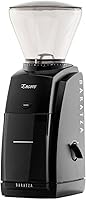
Baratza Encore: Best for manual control
- 40 grind settings
- 40 mm hardened alloy steel conical burrs
- Front pulse button and on/off switch
- 1-year warranty
The Encore suits brewers who want to control when grinding starts and stops. Its numbered settings also make it straightforward to record a drip recipe and return to it.
Pros
- Numbered settings support repeatable recipes
- Direct pulse and on/off controls
- Baratza provides a 1-year warranty
Cons
- Requires you to stop the grinding cycle
- Tallest grinder in this group
The Baratza Encore is a good match for drip drinkers who like to measure their beans and control the grinding themselves. A front pulse button and separate on/off switch keep the process direct.
Its 40 numbered settings give you clear reference points when you change beans or brew methods. Write down your preferred drip setting so you can return to it after making French press or pour-over coffee.
The grinder uses 40 mm hardened alloy steel conical burrs, and Baratza provides a 1-year warranty. It measures 5.91 x 5.12 x 13.39 in, so allow clearance above it for adding beans.
The manual controls work well when you stay beside the grinder and want to stop it yourself. They are less convenient if your morning routine depends on starting a cycle and stepping away to prepare breakfast.
Buy the Encore for simple, deliberate control. A small recipe note with bean weight, water amount, and grind setting can make it easy for another person in the house to repeat your coffee.
Skip it if automatic stopping is a firm requirement. Also measure the space beneath your cabinets before choosing it for a brewing station that stays tucked against the wall.
Cuisinart Supreme Grind DBM-8: Best for shared coffee pots
- 18 grind levels
- 4 to 18-cup selector
- 8 oz removable hopper
- Automatic shutoff
The cup selector suits a household that regularly fills a drip brewer for several people. Check the output against your preferred recipe before relying on the cup markings.
Pros
- Cup selector simplifies repeated batch sizes
- Stops automatically after its cycle
- Removable hopper and included cleaning brush
Cons
- Cup selector starts at 4 cups
- Cup markings need to be matched to your brewer and recipe
The Cuisinart Supreme Grind DBM-8 suits a household that regularly makes coffee for several people. Its 4 to 18-cup selector provides a familiar way to choose a batch, and the cycle ends with automatic shutoff.
It has 18 grind levels, stainless steel flat burrs, and a removable 8 oz hopper. The grounds chamber also lifts out, which helps when transferring coffee and clearing out loose grounds.
Treat the cup selector as a starting point for your recipe. Brewer cup markings vary, and a grinder's cup label doesn't establish how much coffee your household prefers.
During the first few brews, weigh the output at your usual selector position. If the coffee-to-water balance needs changing, adjust the batch amount separately from the grind so you know which change helped.
The included brush and scoop support a basic daily routine. Use the brush to clear dry residue, and use weight rather than scoop volume when you want to compare two recipes closely.
Buy it for shared pots and cup-based controls. Skip it if you mostly brew a single mug or need to select a batch below its lowest cup marking.
OXO Brew Compact Conical Burr: Best for small kitchens

- 15 settings plus 29 micro-adjustments
- 50 g bean capacity
- 3.75 x 3.75 x 10.75 in
- Upper and lower burrs come apart for cleaning
This narrow grinder suits a small brewing station or a kitchen where the grinder gets stored between uses. Match its bean capacity to your actual dose rather than your brewer's cup label.
Pros
- Narrow footprint and cord storage
- Pouring spout on grounds container
- Chuteless design and removable burrs aid cleaning access
Cons
- Large coffee doses require more than one load
- Less suited to consecutive large pots
The OXO Brew Compact Conical Burr suits a kitchen where the grinder must fit beside other appliances or be put away after use. Its 3.75 x 3.75 x 10.75 in body needs little counter space, and the cord wraps for storage.
The hopper holds 50 g of beans. OXO describes that as enough for up to 6 cups, or 30 oz of brewed coffee, but your own coffee dose is the better guide.
Check the weight you normally use before choosing this model. If your pot requires more beans than the hopper holds, you'll need to divide the dose into separate loads.
The grinder offers 15 settings plus 29 micro-adjustments. Its grounds container has a pouring spout, which helps direct coffee into a filter basket without using the whole rim as a pouring edge.
The chuteless design and removable upper and lower burrs give access for cleaning. OXO directs users to wipe the body and hopper with a soft, damp cloth, then wash and thoroughly dry the grounds container.
Buy it for a small brewing station and modest batches. Skip it if you regularly fill a large carafe or make consecutive pots, since repeated loading works against the convenience of a compact grinder.
Fellow Opus 2: Best for switching brew methods

- Stepless grind adjustment
- Built-in grind guide includes drip coffee
- Automatic shutoff
- Two magnetic catch cups
Choose the Opus 2 when drip shares your kitchen with espresso or other brew methods. Its continuous adjustment supports small changes, while the lid guide provides starting points.
Pros
- Grind guide covers several brewing methods
- Anti-static technology helps reduce scattered grounds
- Tool-free burr access
Cons
- Continuous adjustment takes more care to record precisely
- Espresso accessories add little value for drip-only homes
The Fellow Opus 2 suits a home where drip coffee shares space with espresso, pour-over, or French press. Its stepless adjustment moves continuously, so you can make changes without being limited to fixed clicks.
A grind guide beneath the lid gives starting points for several methods, including drip. Take a clear note of your preferred position before changing methods, because returning to a continuous dial position requires more care than selecting a numbered step.
It uses 48 mm conical burrs and includes 2 magnetic catch cups. One is for coarser grinds, while the espresso cup works with 54 mm and 58 mm portafilters.
Fellow says its anti-static technology reduces clinging and scattered grounds, and its low-retention design minimizes coffee carried into the next brew. Those features are useful when you change beans, though they don't replace cleaning.
Automatic shutoff ends the grinding cycle, while tool-free burr access supports maintenance. Fellow provides a 2-year standard warranty.
Buy it when several brew methods are part of your actual routine. Skip it if drip is your only method and you would rather use fixed settings or a cup selector.
Its espresso accessories and continuous adjustment have a clear purpose in a mixed brewing setup. They offer less practical value to someone who simply wants to repeat the same morning pot.
How should you choose a drip coffee grinder?
Choose by dose, controls, adjustment, and available space, in that order. These factors determine how easily the grinder fits your morning, while burr diameter or total setting count alone won't settle the decision.
What makes the best grinder for drip coffee easy to use?
The best grinder for drip coffee makes your normal recipe easy to repeat and change. Look for controls you understand and a grind position you can record without guessing.
A timer suits a steady routine, but you should check its output by weight. Manual control suits someone who stays with the grinder, while a cup selector suits a household that thinks in pots rather than individual doses.
In a shared kitchen, agree on one starting recipe. Leave a note with the coffee weight, water amount, and preferred setting so another person doesn't have to rebuild the recipe each morning.
How much bean capacity do you need?
Choose enough capacity for one normal dose, unless you specifically want to keep beans in the hopper. Hopper size describes how much it holds, not how much coffee you must grind at once.
Weigh the beans for your largest common batch before buying. That separates a useful compact option from one that would require repeated loading every day.
Don't choose by cup counts alone. A brewer's small cup marking and your breakfast mug can represent very different amounts of coffee, so compare your recipe in grams and water volume.
How much grind adjustment is useful?
You need useful changes around medium more than you need an impressive total number of settings. Setting counts don't reveal how closely the positions are spaced or how much of the range serves drip brewing.
Fine adjustments help when one position tastes thin but the next tastes harsh. Fixed positions make a recipe easy to record, while continuous adjustment lets you choose a position between them.
Our coffee grind size chart explains how drip differs from other methods. For the Baratza, the Encore settings guide provides starting points you can refine for your brewer.
Should burr shape decide your choice?
Both flat and conical burrs can serve drip brewing, so choose the complete grinder rather than the burr label alone. This group includes both designs, with differences in controls and capacity that are easier to connect to daily use.
Our conical vs flat burr grinder guide explains the distinction. If you're moving from a blade grinder, the burr vs blade comparison explains why adjustable particle size changes the brewing process.
Will the grinder fit your brewing station?
Measure the counter and the space needed to load beans and remove the grounds container. A grinder can fit beneath a cabinet yet still need to slide forward for each use.
Think about the route from grinder to filter basket, too. A clear place to set the container reduces awkward transfers, especially when a scale, brewer, and kettle already share the counter.
How do you set up a grinder for better drip coffee?
Start with a medium grind and a measured recipe, then change only one variable at a time. Follow your brewer's guidance first, because filter shape, batch size, and brewing programs affect the result.
Establish one repeatable coffee-to-water ratio
Use your brewer's recommended ratio, or begin around 60 g of coffee per liter of water. For example, 30 g of coffee with 500 ml of water gives you a clear baseline.
That ratio is a starting point, not a requirement. Once you like the flavor, adjust the amount of coffee slightly if you want a stronger or lighter cup.
Use a scale if you have one. Scoops measure volume, and different beans or grind sizes can pack differently, making equal-looking scoops an unreliable way to compare recipes.
Start near medium, then record the setting
Choose the manufacturer's drip starting point if one is provided, or begin near the medium part of the range. Don't copy a setting number from a different grinder model.
Grind shortly before brewing, place the grounds in the filter, and gently level the bed. Avoid pressing the coffee down, since compacting it can restrict water movement.
Record the beans, dose, water amount, and setting. A short note is enough to show what changed when a later batch tastes different.
Use taste and flow together
Move a little finer if the cup tastes sour or thin and water seems to pass through quickly. Move a little coarser if it tastes harsh or drying and the basket drains slowly.
These are useful clues rather than automatic diagnoses. Stale beans, an unsuitable dose, or a brewer that needs cleaning can also produce disappointing coffee.
Keep the dose and water amount steady while changing grind size. Brew again before making another adjustment, and taste the coffee after it cools enough to judge comfortably.
Recheck your recipe after changing beans or batch size
A new coffee may need a different setting even when the brew method stays the same. Roast level and the beans themselves affect how they grind and extract.
Larger batches also create a deeper coffee bed, which can slow drainage. If a full pot tastes different from a half pot, keep separate notes instead of forcing one setting to suit both.
How should you care for a drip coffee grinder?
Keep the grinding path dry and clear of old residue, and follow the model's manual for disassembly. Cleaning helps prevent old coffee oils and trapped grounds from carrying into fresh batches.
Clear loose grounds during routine use
Empty the catch container after brewing and brush away accessible dry residue as needed. Don't leave yesterday's grounds in the container and pour fresh coffee over them.
Switch off and unplug the grinder before removing parts for cleaning. Use the supplied brush where appropriate, and avoid putting water into the motor housing or grinding mechanism.
If coffee stops feeding normally, stop the grinder and check the manual before reaching inside. Don't use utensils to push beans toward moving burrs.
Clean removable parts as directed
Wash only the parts the manufacturer approves for washing. Dry them completely before reassembly so damp surfaces don't hold grounds or expose beans to moisture.
How often you need deeper cleaning depends on use and the beans you grind. Visible buildup, stale smells, or restricted coffee flow are reasons to inspect the accessible parts.
Our guide to how to clean a burr coffee grinder covers the general process. For the full-size OXO, follow the model-specific steps in our OXO coffee grinder cleaning guide.
Keep bean storage separate from hopper capacity
Store the main supply of beans in a sealed container away from heat and light. Load an amount that fits your routine rather than filling the hopper simply because there's room.
A large hopper is useful for reducing refills, but it doesn't replace suitable storage. Avoid positioning any grinder where steam from a kettle or brewer reaches the beans.
Which mistakes make drip coffee harder to improve?
The biggest mistake is changing several things between brews, because you lose track of what helped. Keep one recipe steady long enough to judge each adjustment.
Confusing strength with extraction
Strong coffee isn't always over-extracted, and weak coffee isn't always under-extracted. Strength describes concentration, while extraction describes what the water draws from the grounds.
If the flavor is pleasant but too light, try a little more coffee at the same grind. If it tastes sour, harsh, or drying, review grind size and brewing conditions before simply adding more grounds.
Assuming a timer measures coffee weight
A remembered duration repeats time, not a weighed dose. Different beans and grind positions can change how much coffee comes out during the same interval.
Check output when you change beans or settings. Once you've established a useful timer duration for a recipe, record it alongside the coffee weight rather than treating it as a universal dose.
Grinding finer to solve every weak cup
A finer grind can increase extraction, but going too fine can slow drainage and make the cup harsh. It can also contribute to an overfilled filter basket or overflow.
Check the dose, filter fit, and brewer's recommended batch size first. If water backs up, move coarser gradually and make sure the basket and outlet are clear.
Chasing a setting from another person's recipe
A recommended setting is a starting point for your brewer and beans. Even a well-described recipe may use a different filter, water supply, or batch size.
Use outside guidance to narrow the range, then let your own brew guide the final adjustment. Keep the setting that produces a cup you enjoy rather than changing it to match a number.
Which drip coffee grinder should you buy?
Choose the best coffee grinder for drip coffee by your main daily constraint. For repeat pots with little setup, buy the full-size OXO Brew; for direct manual control and numbered recipes, choose the Baratza Encore.
Pick the Cuisinart if several people share a pot and cup-based selection suits the household. Choose the compact OXO when your normal dose fits its hopper and reclaiming counter space matters most.
Buy the Fellow Opus 2 when you will actually switch between drip and other brewing methods. If espresso is only a vague future idea, make today's drip routine the deciding factor.
Before ordering, weigh your normal coffee dose and measure your brewing space. If manual pour-over is also part of your week, our best coffee grinders for pour-over guide helps you compare that routine.
Our top 3 picks at a glance
-
1
-
2
-
3
Frequently asked questions
What grind size should you use for drip coffee?
Start with a medium grind, then follow your brewer's instructions and adjust by taste. Move slightly finer if the coffee tastes sour or thin, and slightly coarser if it tastes harsh or drying.
Keep the coffee dose and water amount steady so you can judge each change.
Is a burr grinder better for drip coffee?
A burr grinder is the better choice when you want repeatable drip coffee. Its adjustable burr gap gives you a setting to return to, which makes recipe changes easier to track.
A blade grinder chops beans without the same control over particle size, often leaving a mixture of fine pieces and larger chunks.
How many grind settings do you need for drip coffee?
You need enough adjustment around medium to improve your coffee without making each change too large. A high total setting count does not show how those settings are spaced.
For a drip-only home, usable adjustments, clear controls, and a suitable batch size matter more than an extensive espresso range.
Does grinder capacity matter for drip coffee?
Capacity matters when your usual coffee dose exceeds what the hopper can hold at once. Weigh the beans for your normal pot before choosing a grinder, especially a compact model.
A large hopper reduces refilling, but it does not mean you should fill it with weeks of beans.
Should you grind beans right before brewing?
Yes, grind shortly before brewing to limit the time grounds spend exposed to air. Measure only what you need, then transfer the grounds into the filter and start your brewer.
Keep the remaining whole beans in a sealed container away from heat, moisture, and direct sunlight.