Coffee Grinder Brands Compared: Baratza, OXO, Fellow
Among espresso grinder brands, compare Baratza Encore ESP for fixed espresso micro-steps and Fellow Opus 2 for continuous adjustment. Choose OXO for remembered one-touch grinding or the standard Baratza Encore for a filter-first routine with simple controls.
On this page (8 sections)
- Which espresso grinder brands are worth comparing?
- How do Baratza, OXO and Fellow differ?
- How does your espresso basket change the choice?
- Which grinder fits your daily coffee routine?
- How should you set up a grinder for espresso?
- How should you clean and care for a burr grinder?
- What mistakes should you avoid when buying or using one?
- Which espresso grinder brand should you choose?
Among espresso grinder brands, Baratza and Fellow are the first choices here for espresso-focused adjustment. Choose the Baratza Encore ESP for fixed micro-steps, Fellow Opus 2 for continuous control, or consider OXO and the standard Encore when filter coffee leads your routine.
The right model depends on your espresso basket, how often you switch brew methods and how you prefer to measure coffee. A familiar brand name won't make up for adjustment controls that don't suit your daily use.
For the basics behind burr design and grind consistency, start with our complete burr coffee grinder buying guide. This comparison covers 4 specific grinders from 3 brands.
Which espresso grinder brands are worth comparing?
Compare Baratza, OXO and Fellow by model rather than brand reputation alone. Baratza's 2 grinders serve different needs, while OXO emphasizes repeat operation and Fellow Opus 2 provides continuous grind adjustment.
| Brand and model | Adjustment approach | Best starting point for |
|---|---|---|
| OXO Brew Conical Burr Grinder | 15 settings plus 43 micro-adjustments | Repeat batches and filter-first households |
| Baratza Encore | 40 settings across its brew range | Everyday coffee with simple physical controls |
| Baratza Encore ESP | Espresso micro-steps at 1–20; filter macro-steps at 21–40 | Regular espresso plus filter brewing |
| Fellow Opus 2 | Stepless adjustment | Brewers who want small changes between fixed positions |
All 4 cover multiple brewing methods, but a broad range isn't the same as fine control within the espresso range. A grinder can reach a fine setting yet leave you wanting a position between 2 steps.
What matters most when comparing espresso grinder brands?
Put espresso adjustment ahead of the total setting count if you use a nonpressurized basket. You need enough control to slow or speed the shot without changing your coffee dose just to compensate.
Fixed positions are useful when you want clear reference points. Continuous adjustment is useful when one position runs too fast and a slightly finer position slows the shot too much.
Burr size alone shouldn't decide this comparison. Adjustment, grounds transfer and cleaning access are easier to connect to the tasks you'll repeat each morning.
How do Baratza, OXO and Fellow differ?
Choose OXO for repeat operation, the standard Encore for filter-first brewing, Encore ESP for defined espresso steps, and Opus 2 for continuous adjustment. Each model has a clear buyer, along with reasons to choose something else.
OXO: repeat batches with a remembered timer
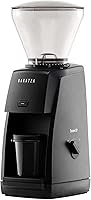
The OXO Brew Conical Burr Grinder suits households that repeat a similar coffee routine. Its one-touch timer remembers the last grinding-time setting, so you don't have to select it again for each batch.
The grinder uses 40 mm stainless steel conical burrs, and its removable hopper has a UV-blocking tint. OXO backs it with a 2-year warranty.
Choose it when drip, French press or other filter brewing makes up most of your week. The timer is helpful when you keep using the same beans and batch size, though you should still check the amount of ground coffee.
A timer controls run time, not coffee weight. A different bean or grind setting can change how much coffee comes out during the same interval, so weigh a batch after either change.
Skip OXO as your first choice here if your main goal is frequent, fine espresso adjustment. The ESP and Opus 2 offer clearer reasons to choose them for that task.
Keep the hopper away from heat and direct sunlight even with its tinted walls. For model-specific care, see our OXO conical burr grinder cleaning guide.
Baratza Encore: simple controls for filter-first homes
The standard Baratza Encore suits brewers who mainly make filter coffee and prefer direct controls. Its front-mounted pulse button and on/off switch let you start and stop grinding without setting a timer.
It uses 40 mm hardened alloy steel conical burrs, and Baratza provides a 1-year warranty. The grind range covers several brew methods, including espresso, but it doesn't separate out a dedicated espresso micro-range.
Choose the Encore when you want a straightforward grinder for drip, pour-over and French press. The pulse control also suits someone who prefers to watch the dose and stop grinding manually.
Skip the standard Encore if you're buying mainly to dial in a nonpressurized espresso basket. Reaching a fine grind isn't the whole job; being able to make a small enough correction matters just as much.
It can remain on your shortlist for a filter-first kitchen with occasional pressurized-basket use. Check what your espresso machine requires before making that compromise.
Our Baratza Encore vs Encore ESP guide explains the more useful distinction within this brand: everyday range versus espresso-focused adjustment.
Baratza Encore ESP: fixed steps for regular espresso
The Baratza Encore ESP suits espresso drinkers who want defined adjustment steps and a filter range in one grinder. Its smaller steps in the espresso range give it a stronger fit for this use than the standard Encore.
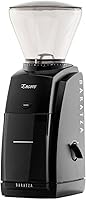
A hopper twist changes grind size, while the front pulse button and on/off switch control grinding. It has 40 mm hardened alloy steel burrs, plus a grounds bin and an espresso dosing cup.
The dosing cup gives you a way to transfer grounds into a portafilter, while the bin serves larger batches. Its quick-release burr also makes routine access possible without extra tools.
Choose the ESP if you want to write down a numbered setting and make controlled changes from there. It fits a home where espresso is regular but drip or pour-over still has a place.
Skip it if continuous adjustment is a firm preference. Its espresso steps are smaller than its filter steps, but they remain fixed positions.
If you already have the standard model, read whether the Baratza Encore can grind fine enough for espresso before deciding that a different bean or technique will solve an adjustment limit.
Fellow Opus 2: continuous control and measured doses
Fellow Opus 2 suits brewers who want small grind changes without fixed steps. That control is useful when you're dialing in espresso and want to move between positions that a stepped grinder would lock in.
It has 48 mm conical burrs and 2 magnetic catch cups. The espresso cup is compatible with 54 mm and 58 mm portafilters, while the other cup serves coarser grounds.
Automatic shutoff handles the end of grinding, and a guide under the lid provides starting points for different methods. Fellow also provides tool-free burr access and a standard 2-year warranty.
Fellow says Opus 2 minimizes retained coffee and reduces clinging grounds with anti-static technology. For a measured-dose routine, weigh what comes out rather than assuming every bean reaches the cup.
Choose it when continuous adjustment and cup-to-portafilter transfer match how you want to work. Skip it if fixed stops are more important to you than small changes between positions.
Record your dial position carefully when switching methods, since there are no fixed clicks to count. Our Baratza Encore vs Fellow Opus comparison gives more context for choosing between those approaches.
How does your espresso basket change the choice?
A nonpressurized basket makes fine grind adjustment a higher priority. A pressurized basket creates added resistance at its outlet and is generally more forgiving of grind differences.
With a nonpressurized basket, the coffee bed supplies much of the resistance to water flow. Grind too coarse and water can pass through quickly; grind too fine and the shot can slow sharply or stall.
That makes the Encore ESP and Opus 2 the stronger starting points here for regular nonpressurized espresso. Choose between them based on fixed reference points versus continuous movement.
For a pressurized-basket machine used alongside a drip brewer, OXO or the standard Encore deserves consideration. Buy for the coffee you make most often, while checking the machine manual's grind guidance.
Don't choose a grinder around vague plans to make espresso someday. If a nonpressurized machine is already part of your next setup, however, choose the adjustment system for that use now.
Which grinder fits your daily coffee routine?
Match the grinder to your busiest normal morning, not an occasional weekend project. Consider how you dose, how many people brew and whether everyone uses the same beans.
| Your routine | Start with | Reason |
|---|---|---|
| Repeat filter batches with the same beans | OXO | Remembered grinding time reduces repeated setup |
| Filter coffee with manual start and stop | Baratza Encore | Pulse button and switch keep operation direct |
| Espresso with settings you can record as numbers | Baratza Encore ESP | Defined espresso micro-steps |
| Espresso with very small grind corrections | Fellow Opus 2 | Continuous adjustment |
| Regular switching between espresso and filter | Encore ESP or Opus 2 | Espresso-focused control with a broader brew range |
A shared household should agree on a way to record settings. Leave a note with the bean name, brew method and dial position so one person's French press doesn't become another person's espresso starting point.
Frequent bean changes also favor a measured-dose routine. Weigh the beans for each brew, then check the grounds output to spot coffee left in the grinder or cup.
Measure your counter space with room to lift the lid and remove the catch container. A grinder that fits under a cabinet still needs enough access for filling and care.
For a wider shortlist beyond these brands, compare our best coffee grinders for espresso.
How should you set up a grinder for espresso?
Start with a fixed dose and brew recipe, then adjust grind size one step at a time. Changing several things at once makes it hard to tell why a shot improved or got worse.
Establish a repeatable starting point
Follow the grinder's assembly instructions and the machine's basket guidance. Choose a dose that suits the basket rather than filling it by eye or forcing in more grounds.
Use the brand's espresso starting guidance where available. For a fuller explanation of the target texture and adjustment process, read what grind size is best for espresso.
Keep the beans, dose and target beverage weight the same while dialing in. A scale helps you separate a grind problem from a dose or yield change.
Make one controlled change
If the shot rushes through at your chosen dose and yield, try a slightly finer grind. If it barely flows, try a slightly coarser grind while keeping preparation consistent.
Follow the manual's instructions for moving finer, since adjustment procedures can differ. After a change, retained grounds can mix the old setting with the new one; allow for that before making another correction.
Taste the coffee as well as watching flow. Shot time is a reference, not the whole goal, and sourness or bitterness can have causes beyond grind size.
Keep a short coffee log
Write down the bean, dose, setting and beverage weight once the result suits you. Add a short taste note so you know what you're trying to repeat.
Expect to make small corrections as beans age or when you open a different bag. Returning to a recorded setting gives you a starting point, not a promise of an identical shot.
How should you clean and care for a burr grinder?
Remove built-up grounds regularly and follow the model's instructions for burr access. Old coffee residue can affect flavor, while buildup around the outlet can interfere with grounds flow.
Unplug the grinder before opening it for cleaning. Use a dry brush on approved areas, and avoid water in the burr chamber, motor housing or electrical parts.
Wash removable parts only when the manual permits it, and let them dry fully before reassembly. Never reach into a grinder while it's connected to power.
The Encore ESP and Opus 2 offer convenient burr access, but correct reassembly still matters. Check that everything seats as instructed before adding beans and restarting.
Clean more often if you grind daily, switch coffees often or notice residue building up. Our burr grinder cleaning guide explains how to plan routine care without guessing at the internal parts.
Don't store more beans in the hopper than you'll use soon. A large hopper provides room for beans; it doesn't replace suitable coffee storage.
What mistakes should you avoid when buying or using one?
Avoid choosing by brand name, setting count or burr diameter alone. The most useful feature is the one that solves a problem in your actual brewing routine.
- Buying the standard Encore when you mean the Encore ESP. Check the full model name, because their adjustment systems serve different priorities.
- Treating fine range as precise espresso control. The gap between usable settings matters when a small change affects shot flow.
- Expecting a timer to measure weight. Weigh the output after changing beans, grind size or batch size.
- Changing dose and grind together. Hold one steady so you can judge the effect of the other.
- Blaming every poor shot on the grinder. Uneven distribution, inconsistent tamping and a dirty basket can also cause uneven flow.
- Ignoring grounds left behind. Small differences between bean input and grounds output can affect a small espresso dose.
- Choosing a transfer cup without checking the portafilter. Cup compatibility matters if you want a direct transfer routine.
Don't try to solve a slow shot by forcing the machine to run much longer without reviewing the grind and dose. Start with a small, controlled correction and keep the rest of the recipe steady.
Which espresso grinder brand should you choose?
Choose among these espresso grinder brands by the adjustment you want to use every day. Once you've matched that control to your basket and main brew method, the decision becomes much simpler.
Pick Baratza Encore ESP for regular espresso with defined steps you can record. Pick Fellow Opus 2 when you want continuous changes and its catch-cup workflow suits your portafilter.
Choose OXO for repeat filter batches with a remembered timer. Choose the standard Baratza Encore for filter-first brewing with direct pulse and switch controls.
Before your first brew, settle on a dose and record a starting setting. Our Baratza Encore grind settings guide can help Encore users connect those reference points with common brewing methods.
Frequently asked questions
Which grinder brand is best for espresso?
Start with the Baratza Encore ESP and Fellow Opus 2 for espresso; choose the ESP if you want fixed micro-steps you can record easily, or Opus 2 if you want continuous adjustment between positions. Pick the model around your basket and daily routine rather than choosing by brand alone.
Can the Baratza Encore grind for espresso?
The standard Baratza Encore includes espresso in its grind range, but it doesn't have the Encore ESP's separate fine-adjustment range; that matters most with a nonpressurized basket, where small grind changes affect flow. Choose the ESP over the standard Encore when espresso is your main reason for buying.
What is the difference between stepped and stepless grind adjustment?
Stepped adjustment uses fixed positions, while stepless adjustment moves continuously between positions: fixed steps make a setting simple to record and revisit; continuous movement lets you make smaller changes when dialing in espresso. Neither removes the need to keep your coffee dose and brewing routine consistent.
Which grinder is easiest to clean?
Prioritize the Baratza Encore ESP or Fellow Opus 2 if easy burr access matters: the ESP has a quick-release burr, while Opus 2 provides tool-free burr access. Follow the model's removal and reassembly instructions, unplug before cleaning, and keep water away from the motor and burr chamber.